
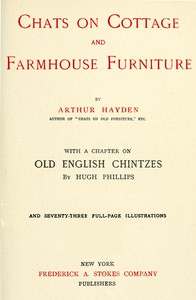
Chats on Cottage and Farmhouse Furniture by Arthur Hayden
Arthur Hayden's 'Chats on Cottage and Farmhouse Furniture' is a warm, inviting tour through several hundred years of British domestic life, told through the chairs, tables, and cupboards people used every day. First published in the early 1900s, it feels less like a textbook and more like a series of lively conversations with a deeply knowledgeable friend.
The Story
There isn't a traditional plot with characters, but there is a wonderful narrative thread: the evolution of simple furniture from the Tudor period through the 18th century. Hayden guides us from massive oak chests and crude stools to the more refined dressers and gate-leg tables of later years. He shows how changes in society, tools, and materials directly shaped what people built for their homes. Each chapter focuses on a type of furniture—like settles, dressers, or chairs—explaining its construction, regional variations, and purpose in cottage life. The "story" is the quiet history of craftsmanship and necessity, revealing how our ancestors lived through the objects they lived with.
Why You Should Read It
This book has a superpower: it changes how you look at things. After reading it, a simple wooden bowl or a chest with iron hinges feels charged with history. Hayden's passion is contagious. He writes with genuine affection for these pieces and the anonymous craftsmen who made them. You get a real sense of the people—the farmer needing a sturdy table, the housewife storing her pewter on a dresser. It’s social history told through wood and joinery, and it’s utterly fascinating. The numerous photographs and drawings are essential, helping you spot the details he describes.
Final Verdict
Perfect for history lovers, antique enthusiasts, or anyone who enjoys 'The Repair Shop' or flea market hunting. It’s also a great read for woodworkers interested in historical techniques. While some terminology can be old-fashioned (it was written in 1905!), Hayden's enthusiasm makes it accessible. This isn't a dry reference manual; it's a love letter to the humble, beautiful objects of everyday life from centuries past. You’ll finish it looking at your own furniture—and history itself—with new eyes.
No rights are reserved for this publication. Access is open to everyone around the world.








Ava Martin
1 year agoI came across this while browsing and the storytelling feels authentic and emotionally grounded. Highly recommended.