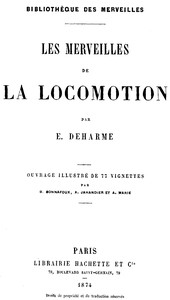
Les Merveilles de la Locomotion by E. Deharme
Let's set the scene: France, the late 1870s. The world is changing at a dizzying speed, and two friends – let's call them the Enthusiast and the Skeptic – embark on a grand tour. Their mission? To experience firsthand every marvel of locomotion the age has to offer.
The Story
The plot is simple: a travelogue with a philosophical heartbeat. We follow these two companions as they rattle across continents on steam trains, wobble along on velocipedes (those giant-wheeled early bicycles), chug in early motorcars, and float uneasily in balloons. Each new vehicle is a springboard for conversation. The Enthusiast is electrified. He sees conquered distances, connected cities, and the glorious march of science. The Skeptic, however, feels the grind. He points out the soot-covered landscapes, the way travel has become a blur instead of an experience, and the strange new anxiety that comes with always being able to go somewhere else. Their journey becomes a moving debate, a clash of worldviews set against the clatter of machinery.
Why You Should Read It
Here's what got me: this isn't a dry history book. It's a conversation that feels incredibly current. Deharme had the genius to capture that exact moment of technological whiplash. Reading their arguments about whether faster travel makes life better or just more hectic is like reading a transcript about smartphones and social media. The characters are archetypes, sure, but they're compelling because we all have a bit of both inside us. I found myself nodding along with one, then the other. The book doesn't force an answer; it just lays out the dilemma with stunning clarity, making you examine your own relationship with the tools and pace of your life.
Final Verdict
This is a gem for anyone curious about how people in the past imagined our present. It's perfect for history buffs who like social commentary, fans of steampunk aesthetics looking for the real deal, and any modern reader who has ever felt ambivalent about progress. It's short, thought-provoking, and a powerful reminder that our big questions about technology and humanity are anything but new. A truly fascinating read from the dawn of speed.
This book is widely considered to be in the public domain. It is now common property for all to enjoy.