About 261 minutes
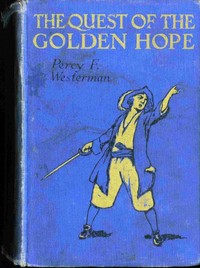
The Quest of the 'Golden Hope': A Seventeenth Century Story of Adventure — Themes and Context
Exploration Survival Adventure Tales
59,906 recorded words. 2 minutes difference from this book's estimate.
View Gutenberg source #38222

For Frank Merriwell's New Comedian; Or, The Rise of a Star — Inside the Classic, the stored edition analysis reports 59,412 words, 4 hr 19 min estimated reading time, and 6 detected text sections.
The text analysis averages about 12.6 words per sentence, while the detected sections provide another way to judge how the source is divided.
Project Gutenberg metadata also associates the work with “Adventure stories,” connecting these edition facts with the source record’s subject description.
Explore this collection
These alternatives are selected using recorded categories and estimated reading time.
About 261 minutes
Exploration Survival Adventure Tales
59,906 recorded words. 2 minutes difference from this book's estimate.
View Gutenberg source #38222About 252 minutes
Exploration Survival Adventure Tales
57,877 recorded words. 7 minutes difference from this book's estimate.
View Gutenberg source #51792About 280 minutes
Exploration Survival Adventure Tales
64,367 recorded words. 21 minutes difference from this book's estimate.
View Gutenberg source #41641Search stored excerpts and compare books → Choose by your preferences →
Choices use stored catalog measurements. Estimates vary with reading speed. A shared category is a catalog label, not a claim that two books have the same argument or literary quality.
Search reads excerpt text stored with this catalog and links to its associated Gutenberg record. The connection is stored in the site database; this tool does not recheck that every excerpt is word-for-word identical to that external record. Excerpt search does not cover every chapter and does not verify historical publication dates.
Catalog snapshot checked: 2026-09-25. Coverage: 95 public books, 95 available source excerpts.
Calculated from edition completeness, EPUB availability, text structure and catalogue metadata. Not a user rating.
Total of 100 points, scaled to a 2.5-5.0 range. Editions with an empty description or a missing EPUB file are not scored.
Public-domain source text
The source text is kept in the dedicated reader, separate from this catalogue record and its commentary.
Frank Merriwell's New Comedian marks a notable shift in the long-running series, moving from athletic contests to the world of theater. The narrative voice remains brisk and declarative, but the pacing becomes more deliberate during suspense sequences. Standish uses short, punchy sentences to heighten tension, as when Frank narrowly escapes a fall: "No wonder he felt weak and limp. No wonder that he was jarred and somewhat bewildered." The interior monologue—"Thank God!"—reveals a reflective side of the hero, contrasting with the action-oriented earlier installments.
The narrator maintains an omniscient but close third-person perspective, often filtering events through Frank's consciousness. This is evident in the scene where Frank awakens to danger: "Frank understood the full extent of the peril through which he had passed, and a prayer welled from his lips." The voice blends external action with internal reaction, giving readers access to Frank's gratitude and bewilderment. Standish occasionally breaks into direct exclamation—"What was it? Was it some good spirit that hovered near to protect him?"—which injects a melodramatic tone typical of the series. This technique keeps the emotional stakes high even during quieter moments.
The pacing in the excerpted passage is carefully controlled. Standish builds suspense through a sequence of short, fragmented actions: Frank lies panting, hears no sound, rises, lights the gas, and looks around. Each step is described in a separate sentence, slowing time and amplifying tension. The revelation that the room was occupied—"the bed was undisturbed"—creates a mystery that drives the narrative forward. The dialogue with the watchman introduces a lighter rhythm, with rapid exchanges that contrast the earlier tension. The punchline—"William Shakespeare Burns"—delivers a comic jolt that shifts the mood abruptly, showcasing Standish's ability to modulate pace within a single chapter.
Dialogue in this excerpt serves both to advance the plot and to define character. Frank speaks with polite urgency: "I want to know the name of the man who occupies No. 231." The watchman's responses are practical and slightly skeptical: "Does he snore loudly?" This exchange reveals Frank's resourcefulness—he offers a bribe—and the watchman's mercenary nature. Standish uses colloquial phrasing ("I didn’t think you could hear through those partitions") to ground the conversation in realism. The name "William Shakespeare Burns" is a deliberate absurdity that signals the theatrical theme, and Frank's reaction—"Frank staggered"—underscores his shock. The dialogue thus carries both narrative and thematic weight.
Readers approaching this installment should attend to how Standish balances the series' trademark action with new theatrical elements. The narrative voice remains consistent, but the pacing varies more widely than in earlier volumes, alternating between breathless suspense and comic relief. Pay attention to the way interior monologue and dialogue work together to reveal character, especially in scenes where Frank must think on his feet. These techniques make Frank Merriwell's New Comedian a distinctive entry in the series.
I’ve always loved how Frank Merriwell’s inner showman emerges when the stage replaces the field, that quiet thrill of a boy finding his voice. It reminds me of another patient friendship with the wilderness—With the Indians in the Rockies — Reading Notes—where our narrator learns he belongs not by conquering, but by listening. Both books whisper that same gentle truth.
Answer a few questions and save a private reflection on this device.