About 465 minutes
The Air Patrol: A Story of the North-west Frontier — Key Ideas to Explore
Exploration Survival Adventure Tales
106,816 recorded words. 144 minutes difference from this book's estimate.
View Gutenberg source #42417
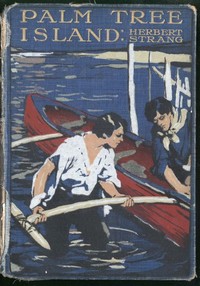
Palm Tree Island — A Closer Reading can be approached with a clearer sense of reading commitment from its source measurements: 139,969 words, 10 hr 9 min estimated reading time, and 14 detected text sections.
The text analysis averages about 36.8 words per sentence, while the detected sections provide another way to judge how the source is divided.
Project Gutenberg metadata also associates the work with “Adventure stories,” connecting these edition facts with the source record’s subject description.
Explore this collection
These alternatives are selected using recorded categories and estimated reading time.
About 465 minutes
Exploration Survival Adventure Tales
106,816 recorded words. 144 minutes difference from this book's estimate.
View Gutenberg source #42417About 461 minutes
Exploration Survival Adventure Tales
105,848 recorded words. 148 minutes difference from this book's estimate.
View Gutenberg source #38087About 432 minutes
Exploration Survival Adventure Tales
99,286 recorded words. 177 minutes difference from this book's estimate.
View Gutenberg source #45690Search stored excerpts and compare books → Choose by your preferences →
Choices use stored catalog measurements. Estimates vary with reading speed. A shared category is a catalog label, not a claim that two books have the same argument or literary quality.
Search reads excerpt text stored with this catalog and links to its associated Gutenberg record. The connection is stored in the site database; this tool does not recheck that every excerpt is word-for-word identical to that external record. Excerpt search does not cover every chapter and does not verify historical publication dates.
Catalog snapshot checked: 2026-09-25. Coverage: 95 public books, 95 available source excerpts.
Calculated from edition completeness, EPUB availability, text structure and catalogue metadata. Not a user rating.
Total of 100 points, scaled to a 2.5-5.0 range. Editions with an empty description or a missing EPUB file are not scored.
Public-domain source text
The source text is kept in the dedicated reader, separate from this catalogue record and its commentary.
Herbert Strang's Palm Tree Island (1910) announces its debt to the castaway tradition through a full title that echoes Defoe, yet the narrative voice quickly establishes its own character. The first-person narrator, Harry Brent, combines a practical eye for survival with a persistent curiosity about natural processes—a trait that shapes the book's structure as much as its plot. The excerpts reveal a work built around alternating rhythms: periods of industrious construction (huts, trenches, canoes) punctuated by sudden threats (wild dogs, savages, sea monsters). This oscillation between domestic order and external danger gives the story its momentum.
The trench-digging episode in Chapter XIII exemplifies how Strang uses a single practical task to advance multiple narrative threads. What begins as a solution to rainwater flooding—a half-circle ditch to divert runoff into the lake—quickly becomes the occasion for a playful discussion about moats and castles. Harry's explanation of medieval fortifications prompts Billy's skeptical retort: "What's the good unless they'd got enough victuals inside?" This exchange does more than lighten the tone; it foreshadows the siege mentality that will dominate later chapters. The trench thus functions as both a literal engineering problem and a symbolic preparation for conflict, linking the domestic sphere of the hut to the wider island dangers.
A recurring structural pattern emerges from the contrast between Harry's inquisitive nature and Billy's practical indifference. When Harry puzzles over why the lake never rises above a certain level despite heavy rain, Billy dismisses the question: "it didn't matter to us, and we shouldn't be any better off if we did know." Harry, however, admits he "felt a great curiosity always to learn the reasons and causes of matters which were not easy to understand." This dynamic drives the narrative forward: Harry's observations often lead to discoveries (the lake's outlet is revealed by accident), while Billy's groundedness ensures survival tasks get done. The interplay between these two modes of attention gives the novel a dual rhythm of reflection and action.
Water imagery pervades the excerpts, from the flooded hut to the proposed moat. The rain that "swept down in a wide torrent from the heights" transforms the hut into an uncomfortable, sodden space, forcing the castaways to sleep on a bench table. This discomfort prompts the trench—a man-made channel to control water. Later, the moat idea extends the motif of enclosure: a ditch filled with water becomes a defensive boundary. The lake itself, with its mysterious constant level, hints at hidden subterranean passages, a detail that Strang promises to reveal "in its place." These water-related structures—trench, moat, lake—create a geography of containment and release, mirroring the castaways' precarious control over their environment.
A notable feature of the text is the occasional footnote signed "H.S."—Herbert Strang himself—commenting on the narrator's prose. In the excerpt, a footnote dismisses a passage as "A rather long-winded allusion to refraction." This metafictional gesture breaks the illusion of Harry's first-person account, reminding the reader of an editorial presence. It also signals Strang's awareness of his narrator's verbosity, adding a layer of self-deprecating humor. Such interjections are rare but strategically placed, often after a digression, and they serve to tighten the narrative by acknowledging—and gently mocking—Harry's tendency to wander. This technique gives the novel a distinctive texture, blending earnest adventure with wry commentary.
Readers approaching Palm Tree Island will find a castaway story that values process as much as peril. The narrative lingers over the making of things—trenches, huts, canoes—and the conversations that arise during labor. Pay attention to the footnotes signed "H.S."; they offer a quiet counterpoint to Harry's earnestness. The book rewards those who enjoy watching survival unfold through small, deliberate steps rather than constant crisis.
That rainy afternoon, I kept returning to the trench-digging scene in Palm Tree Island, noticing how the narrator’s hands worked while his mind wandered elsewhere. It reminded me of winter fires and quiet reflection, which is how I stumbled upon Elsie's Winter Trip — Edition Insights later that evening. Sometimes one book simply hands you the next, like passing a warm cup.
Capture what you thought, learned, and would like to remember.