About 259 minutes
Frank Merriwell's New Comedian; Or, The Rise of a Star — Inside the Classic
Exploration Survival Adventure Tales
59,412 recorded words. 2 minutes difference from this book's estimate.
View Gutenberg source #38610
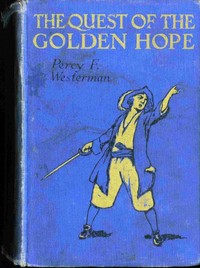
The source record for The Quest of the 'Golden Hope': A Seventeenth Century Story of Adventure — Themes and Context measures this digital text at 59,906 words, 4 hr 21 min estimated reading time, and 7 detected text sections.
The text analysis averages about 21.3 words per sentence, while the detected sections provide another way to judge how the source is divided.
Project Gutenberg metadata also associates the work with “Sea stories,” connecting these edition facts with the source record’s subject description.
Explore this collection
These alternatives are selected using recorded categories and estimated reading time.
About 259 minutes
Exploration Survival Adventure Tales
59,412 recorded words. 2 minutes difference from this book's estimate.
View Gutenberg source #38610About 252 minutes
Exploration Survival Adventure Tales
57,877 recorded words. 9 minutes difference from this book's estimate.
View Gutenberg source #51792About 280 minutes
Exploration Survival Adventure Tales
64,367 recorded words. 19 minutes difference from this book's estimate.
View Gutenberg source #41641Search stored excerpts and compare books → Choose by your preferences →
Choices use stored catalog measurements. Estimates vary with reading speed. A shared category is a catalog label, not a claim that two books have the same argument or literary quality.
Search reads excerpt text stored with this catalog and links to its associated Gutenberg record. The connection is stored in the site database; this tool does not recheck that every excerpt is word-for-word identical to that external record. Excerpt search does not cover every chapter and does not verify historical publication dates.
Catalog snapshot checked: 2026-09-25. Coverage: 95 public books, 95 available source excerpts.
Calculated from edition completeness, EPUB availability, text structure and catalogue metadata. Not a user rating.
Total of 100 points, scaled to a 2.5-5.0 range. Editions with an empty description or a missing EPUB file are not scored.
Public-domain source text
The source text is kept in the dedicated reader, separate from this catalogue record and its commentary.
The narrative voice of The Quest of the 'Golden Hope' shifts between breathless action and reflective interludes, a rhythm established from the opening chapters. The first-person narrator, Master Hammond, recounts events with a formal, slightly archaic diction—'ere', 'hark'ee', 'bid them go'—that grounds the story in its seventeenth-century setting. Yet the prose also carries a modern briskness, especially in battle scenes, where short, declarative sentences accelerate the pace: 'A hurried glance showed that the Neptune had also succeeded in beating off her attackers.' This alternation between measured exposition and rapid-fire description gives the novel a distinctive pulse, one that rewards attention to how Westerman controls tempo through sentence length and paragraph breaks.
Westerman employs a first-person narrator who is both participant and retrospective commentator. Master Hammond often steps back from immediate action to offer a summary judgment—'It seemed at this juncture that the buccaneers would succeed'—creating a double perspective: the urgency of the moment and the calm of hindsight. This technique allows the author to vary pace without sacrificing coherence. The narrator's voice remains consistent, using nautical terms ('heave roundly', 'swivel guns') and period-appropriate exclamations ('Hath the long-boat pushed off yet?'), but never becomes so archaic as to obscure meaning. The effect is a controlled intimacy: the reader sees events through Hammond's eyes, yet senses the older, wiser storyteller shaping the tale.
The excerpted battle scene demonstrates Westerman's method for accelerating narrative tempo. He uses short, action-packed sentences—'Two more disappeared amidst a swirl of shot-torn water'—interrupted by direct commands: 'Aim carefully! Wing 'em!' The paragraph breaks often coincide with shifts in focus, from the broadside to the wounded captain to the boarding party. This fragmentation mimics the chaos of combat while maintaining clarity. Notably, Westerman slows the pace immediately after the captain is shot, inserting a moment of stillness: 'There we found that the wound, though dangerous, might not prove mortal.' This rhythmic contrast between rapid action and reflective pause is a hallmark of the novel's style, preventing the reader from becoming desensitized to violence.
Several structural patterns recur in the excerpts. One is the use of a sudden reversal—a 'chance pistol shot' or a 'treacherous' attack from a seemingly defeated enemy—that upends the momentum of a scene. Another is the motif of the 'slow match to the magazine', a warning that appears in Captain Jeremy's orders and hints at hidden dangers. These devices create a sense of precariousness, where victory is never secure. Westerman also employs a pattern of escalation: a skirmish leads to a broader engagement, which then reveals a new threat (e.g., the grounded ship, the wounded captain). This layered structure keeps the narrative moving forward while introducing fresh complications, a technique well suited to serialized adventure fiction.
Readers attuned to narrative craft will find much to observe in Westerman's handling of tempo and voice. The novel rewards attention to how the author shifts between panoramic battle descriptions and intimate character moments, and how the first-person perspective shapes the reader's trust in the narrator's reliability. The excerpts suggest a work that balances formulaic adventure elements with a more deliberate, almost cinematic sense of pacing—a quality that distinguishes it from many contemporaries in the genre.
That first-person shift—breathless one moment, strangely still the next—reminded me of an old school library afternoon, turning pages of Arsène Lupin versus Herlock Sholmes — Reading Companion. Both tales carry that quiet beat between chases, where a character notices the salt air or a ticking clock. I remember thinking how adventure novels often pause, just briefly, to let you feel the weight of the day behind you.
A brief reflection can help important ideas stay with you longer.