About 461 minutes
The Boy Ranchers of Puget Sound — Edition Insights
Exploration Survival Adventure Tales
105,848 recorded words. 4 minutes difference from this book's estimate.
View Gutenberg source #38087
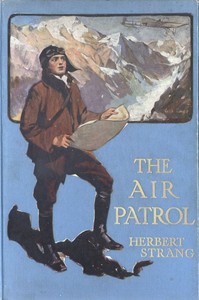
This digital edition of The Air Patrol: A Story of the North-west Frontier — Key Ideas to Explore is described by source-level measurements including 106,816 words, 7 hr 45 min estimated reading time, and 13 detected text sections.
The text analysis averages about 17.4 words per sentence, while the detected sections provide another way to judge how the source is divided.
Project Gutenberg metadata also associates the work with “Adventure stories,” connecting these edition facts with the source record’s subject description.
Explore this collection
These alternatives are selected using recorded categories and estimated reading time.
About 461 minutes
Exploration Survival Adventure Tales
105,848 recorded words. 4 minutes difference from this book's estimate.
View Gutenberg source #38087About 432 minutes
Exploration Survival Adventure Tales
99,286 recorded words. 33 minutes difference from this book's estimate.
View Gutenberg source #45690About 361 minutes
Exploration Survival Adventure Tales
82,881 recorded words. 104 minutes difference from this book's estimate.
View Gutenberg source #43114Search stored excerpts and compare books → Choose by your preferences →
Choices use stored catalog measurements. Estimates vary with reading speed. A shared category is a catalog label, not a claim that two books have the same argument or literary quality.
Search reads excerpt text stored with this catalog and links to its associated Gutenberg record. The connection is stored in the site database; this tool does not recheck that every excerpt is word-for-word identical to that external record. Excerpt search does not cover every chapter and does not verify historical publication dates.
Catalog snapshot checked: 2026-09-25. Coverage: 95 public books, 95 available source excerpts.
Calculated from edition completeness, EPUB availability, text structure and catalogue metadata. Not a user rating.
Total of 100 points, scaled to a 2.5-5.0 range. Editions with an empty description or a missing EPUB file are not scored.
Public-domain source text
The source text is kept in the dedicated reader, separate from this catalogue record and its commentary.
Herbert Strang's The Air Patrol opens with a preface that explicitly frames the story as a modern Thermopylae, where the fate of India hinges on aerial superiority. The narrative structure alternates between airborne reconnaissance and ground-level combat, with the aeroplane serving as both a tactical asset and a vantage point for surveying the mountainous frontier. The text is punctuated by moments of darkness and illumination—bonfires, electric lights, and the glow of explosions—that define the visual rhythm of the action. The frontier setting is rendered through specific details: narrow passes, river gorges, and the constant threat of ambush from unseen enemies.
The story's structure depends on rapid shifts between aerial and terrestrial scenes. In the excerpt, Bob and Lawrence coordinate a defense from a mine compound while an aeroplane is used for reconnaissance. The text moves from the bonfire blazing on a ledge to the rattling of a machine-gun, then to the sound of horsemen retreating up the valley. These transitions are abrupt, mirroring the unpredictability of frontier warfare. The aeroplane is not described in flight here, but its presence is implied by the need to reconnoitre and the earlier mention of an air patrol. The ground action is tactile and immediate—drilling rock, splicing wire, raising a bridge—while the aerial perspective remains offstage, a hovering possibility that shapes strategy.
Light sources are central to the narrative's visual language. The bonfire blazing on a ledge creates a zone of visibility that the defenders control, while the enemy remains in darkness. Bob orders his men not to fire at random at the cliff opposite because the attackers are invisible. The electric battery and wire for detonating dynamite suggest a technological command of light and power. Later, the quiet of the night is broken by cries and groans and the rattle and hiss of shots. This pattern of illumination and obscurity recurs throughout the text: the mine galleries, the light in the gallery (chapter title), and the edge of the storm all play on visibility as a tactical resource.
The bridge in the excerpt is a physical and symbolic threshold. It is raised a few feet from its platform just as the enemy appears, suggesting a near-miss that defines the action. The defenders must block the track to prevent further incursions. The bridge connects the mine compound to the wider valley; its raising or lowering controls access. This structure echoes earlier frontier outposts and anticipates later chapters like The Fight at the Bridge and A Skirmish on the Bank. The bridge is not merely a setting but a mechanism of suspense: will it be raised in time? The text lingers on the mechanics of its operation, grounding the adventure in practical engineering.
The dialogue between Bob and Lawrence reveals character through action. Bob insists on sharing the dangerous work: We share and share alike. His confident bearing and personal leadership rally the Pathan miners, who initially protest it is not safe. The exchange is terse, focused on tasks—dynamite, wire, bonfire—without emotional elaboration. This clipped, functional speech contrasts with the descriptive passages of the frontier landscape. The author uses dialogue to advance the plot and to establish a code of mutual responsibility. The men do not discuss motives; they act. This restraint gives the narrative a documentary quality, as if recording a real operation.
Readers should attend to the interplay of technology and terrain in The Air Patrol. The aeroplane is less a machine of wonder than a tool for seeing and striking across the mountainous frontier. The story's rhythm depends on the alternation of open sky and constricted pass, of light and shadow. Strang's prose is lean, favoring action over introspection, and the frontier itself—its rivers, cliffs, and hidden paths—becomes a character that shapes every move.
Rain drummed on the windowsill that afternoon while I finished The Air Patrol, tracing its precarious bridges and sudden darknesses. The story’s quiet loyalty lingered, not the explosions. Later, browsing, I found myself pulling down a worn volume from another shelf entirely—The Quest of the 'Golden Hope': A Seventeenth Century Story of Adventure — Themes and Context—and the same patient courage seemed to live there, waiting for the storm to pass.
Create a short personal record of your experience with this book.