About 290 minutes
Polly and Her Friends Abroad — A Reader’s Guide
Exploration Survival Adventure Tales
66,632 recorded words. 71 minutes difference from this book's estimate.
View Gutenberg source #37429
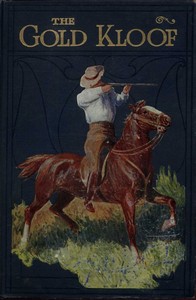
For The Gold Kloof — A Closer Reading, the stored edition analysis reports 82,881 words, 6 hr 1 min estimated reading time, and 11 detected text sections.
The text analysis averages about 17.4 words per sentence, while the detected sections provide another way to judge how the source is divided.
Project Gutenberg metadata also associates the work with “Young men -- Fiction,” connecting these edition facts with the source record’s subject description.
Explore this collection
These alternatives are selected using recorded categories and estimated reading time.
About 290 minutes
Exploration Survival Adventure Tales
66,632 recorded words. 71 minutes difference from this book's estimate.
View Gutenberg source #37429About 432 minutes
Exploration Survival Adventure Tales
99,286 recorded words. 71 minutes difference from this book's estimate.
View Gutenberg source #45690About 283 minutes
Exploration Survival Adventure Tales
65,052 recorded words. 78 minutes difference from this book's estimate.
View Gutenberg source #40203Search stored excerpts and compare books → Choose by your preferences →
Choices use stored catalog measurements. Estimates vary with reading speed. A shared category is a catalog label, not a claim that two books have the same argument or literary quality.
Search reads excerpt text stored with this catalog and links to its associated Gutenberg record. The connection is stored in the site database; this tool does not recheck that every excerpt is word-for-word identical to that external record. Excerpt search does not cover every chapter and does not verify historical publication dates.
Catalog snapshot checked: 2026-09-25. Coverage: 95 public books, 95 available source excerpts.
Calculated from edition completeness, EPUB availability, text structure and catalogue metadata. Not a user rating.
Total of 100 points, scaled to a 2.5-5.0 range. Editions with an empty description or a missing EPUB file are not scored.
Public-domain source text
The source text is kept in the dedicated reader, separate from this catalogue record and its commentary.
The novel opens not in Africa but on the Severn river at Tewkesbury, where Guy Hardcastle, a seventeen-year-old schoolboy, strokes his crew to victory in a boat race. Bryden devotes several paragraphs to the race's ebb and flow—'the flashing blades dip quicker, and yet quicker'—before shifting the action to a South African farm. This structural choice establishes Guy as a capable youth before he faces the veldt's challenges.
Bryden's prose alternates between measured, almost documentary description and lively, colloquial dialogue. The Bushman Poeskop speaks in a distinctive voice ('Ja, baas'), while the narrator describes landscapes with a naturalist's eye: 'the clear moon gazed down upon the little group of serious men with placid serenity.' Such contrasts define the book's texture.
Bryden's vocabulary shifts with the setting. In the English school chapters, the language is formal and slightly archaic: 'the fateful moment at length had come.' Once the party reaches the veldt, the prose becomes more direct and sensory. Verbs like 'snorting,' 'quah-quahed,' and 'droning' anchor the reader in the physical world.
The author often uses compound sentences to build tension, as when the baboon rescue is described: 'Mr. Blakeney swiftly lighted a blue light at his open lantern, and the pair dashed forward.' The coordination of actions mirrors the urgency of the scene. Conversely, moments of stillness are rendered with simple, declarative clauses: 'Not a sound was heard through the vast solitude of these lonely hills.'
Bryden avoids the ornate; his diction is functional but precise. He names specific African flora and fauna—'cicada,' 'kopjes,' 'baviaans'—without explanation, trusting the reader to infer meaning from context. This choice lends authenticity but may challenge modern readers unfamiliar with the terms.
Dialogue distinguishes characters more sharply than description. Poeskop, the Bushman tracker, speaks in a simplified English marked by Afrikaans borrowings: 'Ja, baas,' 'Leave it to me.' His clipped sentences contrast with Mr. Blakeney's measured, authoritative tone: 'Now, lads, you guard the entrance.' Guy's speech is earnest and direct, befitting a young hero.
Bryden uses dialogue to advance the plot and reveal hierarchy. When Poeskop proposes a plan to capture the baboon boy, he defers to Mr. Blakeney: 'It will be a tough job, baas; but we will try.' The response—'How shall we do it, Poeskop?'—shows Guy's willingness to listen, a trait that marks him as a leader-in-training.
The baboons themselves are given voice through onomatopoeia: 'quah-quahed fiercely.' This choice anthropomorphizes them slightly, making the rescue more dramatic. Yet the dialogue never sentimentalizes the animals; they remain threats to be managed.
Bryden devotes considerable space to describing the South African environment, often pausing the action for a paragraph of scene-setting. The moon 'tipping the wild kopjes with pale silver, and casting blue-black shadows from bush and tree and ant-hill' creates a visual contrast that heightens the nocturnal raid's tension.
These descriptions are not mere backdrop; they shape the plot. The 'vast solitude' and 'lonely hills' emphasize the characters' isolation. When Poeskop tracks the baboon troop, the landscape becomes a puzzle to be read: 'I will hide up here among the rocks, and follow up the troop.' The setting demands expertise, which Poeskop supplies.
Bryden also uses the environment to signal danger. The rhinoceros that 'snorted loudly' and 'was upon them' appears with little warning, its suddenness reflecting the veldt's unpredictability. Such moments remind the reader that this is a world where human agency is limited.
The novel's structure mirrors the hero's journey from civilization to wilderness. The opening chapter, set at a school boat race, establishes Guy's competence in a controlled, English environment. Subsequent chapters move him to Bamborough Farm, then into the veldt, each setting more remote than the last.
Bryden paces the narrative by alternating action set-pieces with quieter intervals. The boat race is followed by a conversation with the house-master; the baboon rescue is preceded by a moonlit walk and a discussion of strategy. This rhythm prevents monotony and allows the reader to absorb details.
The chapter titles—'The Gold Spoor,' 'The Trek Begins,' 'In the Thirst-land'—function as signposts, each promising a new phase of the journey. Within chapters, Bryden uses short paragraphs and direct sentences during action, longer ones for description. The effect is a controlled, deliberate unfolding of events.
Readers should attend to how Bryden balances the demands of adventure fiction—excitement, danger, resolution—with a documentary impulse to record the African landscape and its inhabitants. His choices in diction and dialogue reveal a writer conscious of his audience's expectations yet willing to linger on the specific. The novel rewards those who read for both plot and texture.
There’s a particular ache in The Gold Kloof when Guy leaves the rowing boat for the veldt—that pull between one kind of strength and another. It reminded me how certain books linger not for their action but their quiet hours. The same wistfulness haunts The Air Patrol: A Story of the North-west Frontier — Key Ideas to Explore, where distance shapes a boy into something unfamiliar. I found myself pausing there, too.
A brief reflection can help important ideas stay with you longer.