About 461 minutes
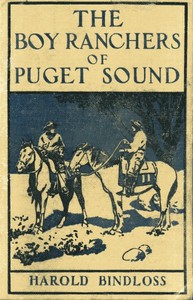
The Boy Ranchers of Puget Sound — Edition Insights
Exploration Survival Adventure Tales
105,848 recorded words. 29 minutes difference from this book's estimate.
View Gutenberg source #38087
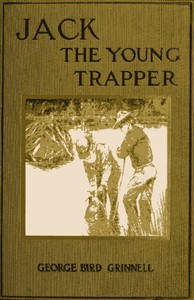
The source record for Jack the Young Trapper: An Eastern Boy's Fur Hunting in the Rocky Mountains — Themes and Context measures this digital text at 99,286 words, 7 hr 12 min estimated reading time, and 9 detected text sections.
The text analysis averages about 23.5 words per sentence, while the detected sections provide another way to judge how the source is divided.
Project Gutenberg metadata also associates the work with “Rocky Mountains -- Juvenile fiction,” connecting these edition facts with the source record’s subject description.
Explore this collection
These alternatives are selected using recorded categories and estimated reading time.
About 461 minutes
Exploration Survival Adventure Tales
105,848 recorded words. 29 minutes difference from this book's estimate.
View Gutenberg source #38087About 465 minutes
Exploration Survival Adventure Tales
106,816 recorded words. 33 minutes difference from this book's estimate.
View Gutenberg source #42417About 361 minutes
Exploration Survival Adventure Tales
82,881 recorded words. 71 minutes difference from this book's estimate.
View Gutenberg source #43114Search stored excerpts and compare books → Choose by your preferences →
Choices use stored catalog measurements. Estimates vary with reading speed. A shared category is a catalog label, not a claim that two books have the same argument or literary quality.
Search reads excerpt text stored with this catalog and links to its associated Gutenberg record. The connection is stored in the site database; this tool does not recheck that every excerpt is word-for-word identical to that external record. Excerpt search does not cover every chapter and does not verify historical publication dates.
Catalog snapshot checked: 2026-09-25. Coverage: 95 public books, 95 available source excerpts.
Calculated from edition completeness, EPUB availability, text structure and catalogue metadata. Not a user rating.
Total of 100 points, scaled to a 2.5-5.0 range. Editions with an empty description or a missing EPUB file are not scored.
Public-domain source text
The source text is kept in the dedicated reader, separate from this catalogue record and its commentary.
George Bird Grinnell's Jack the Young Trapper (1907) is cataloged under juvenile fiction about trapping, frontier life, and the Rocky Mountains. Yet the excerpts reveal a work that often reads less like a story and more like a field manual, with extended passages devoted to identifying waterfowl nests, testing mud for quicksand, and describing beaver behavior. The narrative voice is patient and expository, frequently breaking from action to explain natural processes. This note examines how the catalog subjects both fit and misrepresent the text's actual emphasis on natural history instruction.
The catalog subject 'Trapping -- Juvenile fiction' suggests a plot centered on the capture of fur-bearing animals. In the excerpts, however, trapping is more often a pretext for observing wildlife. When Jack discovers a duck's nest, the text devotes over 300 words to describing the shoveler duck's behavior, the eggs' appearance, and the distinction between coot and grebe nests. The trapping itself is mentioned only in passing. The instructional tone is reinforced by phrases like 'Jack knew, of course' and 'he remembered,' which position the protagonist as a student applying prior lessons. The foreword further frames the book as a record of a 'now forgotten life,' suggesting that the primary goal is preservation of knowledge rather than dramatic adventure.
Cataloged under 'Frontier and pioneer life -- Juvenile fiction,' the excerpts depict the frontier not as a setting for conflict but as a space for methodical learning. Jack's exploration of the pond is a solo exercise in classification: he identifies species by flight patterns, nesting habits, and egg coloration. His decision to strip off his clothes and test the mud's stability is presented as a cautious experiment, informed by a past near-drowning. The narrative rewards careful observation and risk assessment, not daring. The frontier here is less a wilderness to be conquered than a laboratory to be studied. This pedagogical approach aligns with Grinnell's own background as a naturalist and ethnographer, though the catalog subjects do not explicitly signal this emphasis.
The excerpts show a narrative voice that prioritizes clarity over suspense. Sentences are often compound and explanatory: 'Jack knew, of course, that he had startled the duck from her nest, and that her pretense of being wounded was only a ruse.' The structure follows Jack's sequential actions—walking, observing, testing—without dramatic peaks. The pond episode occupies several pages but contains no conflict; it is a self-contained nature study. This expository style is consistent with the book's origin in Grinnell's series of educational adventure tales. Readers expecting a plot-driven trapping story may find the pace deliberate, but those interested in historical natural history will recognize the text as a detailed period document of Rocky Mountain ecology and frontier knowledge.
Readers approaching Jack the Young Trapper through its catalog subjects should adjust expectations: the book is less a tale of fur hunting than a guided nature walk with occasional trapping. Its value lies in the density of specific, accurate observations about animal behavior and landscape. The excerpts suggest that Grinnell used fiction as a vehicle for natural history instruction, making the work a useful primary source for understanding how early twentieth-century educators presented the Rocky Mountain frontier to young readers.
I keep thinking about how Grinnell’s story slips between adventure and quiet instruction, showing a boy learning to read the woods. That same patient attention to small details—how things feel, not just what happens—stayed with me in Nurse Heatherdale's Story, where the tender moments matter most. Nurse Heatherdale's Story — Reading Companion felt like sitting beside someone who notices the gentler things, and I remembered that long after closing it.
Your answers remain private and are stored only in this browser.