About 412 minutes
Mont Oriol; or, A Romance of Auvergne: A Novel — Text and Context
Historical Psychological Social Fiction
94,746 recorded words. 503 minutes difference from this book's estimate.
View Gutenberg source #50311

The source record for Pan Michael: An Historical Novel of Poland, the Ukraine, and Turkey — Edition Insights measures this digital text at 210,363 words, 15 hr 15 min estimated reading time, and 68 detected text sections.
The text analysis averages about 19.0 words per sentence, while the detected sections provide another way to judge how the source is divided.
Project Gutenberg metadata also associates the work with “Historical fiction,” connecting these edition facts with the source record’s subject description.
Explore this collection
These alternatives are selected using recorded categories and estimated reading time.
About 412 minutes
Historical Psychological Social Fiction
94,746 recorded words. 503 minutes difference from this book's estimate.
View Gutenberg source #50311About 399 minutes
Historical Psychological Social Fiction
91,675 recorded words. 516 minutes difference from this book's estimate.
View Gutenberg source #42582About 391 minutes
Historical Psychological Social Fiction
89,703 recorded words. 524 minutes difference from this book's estimate.
View Gutenberg source #43120Search stored excerpts and compare books → Choose by your preferences →
Choices use stored catalog measurements. Estimates vary with reading speed. A shared category is a catalog label, not a claim that two books have the same argument or literary quality.
Search reads excerpt text stored with this catalog and links to its associated Gutenberg record. The connection is stored in the site database; this tool does not recheck that every excerpt is word-for-word identical to that external record. Excerpt search does not cover every chapter and does not verify historical publication dates.
Catalog snapshot checked: 2026-09-25. Coverage: 95 public books, 95 available source excerpts.
Calculated from edition completeness, EPUB availability, text structure and catalogue metadata. Not a user rating.
Total of 100 points, scaled to a 2.5-5.0 range. Editions with an empty description or a missing EPUB file are not scored.
Public-domain source text
The source text is kept in the dedicated reader, separate from this catalogue record and its commentary.
The narrative voice in Pan Michael shifts markedly between scenes of political scheming and descriptions of harsh winter stillness. In one passage, Azya delivers a boastful monologue, claiming to be “a second Hmelnitski” and “a lion,” his speech punctuated by physical gestures and the repeated exclamation “Allah kerim!” from his listener Halim. The translator, Jeremiah Curtin, preserves the rhythmic intensity of Azya's threats through short, parallel clauses and vivid imagery of “red light” in his eyes. Later, the prose slows to describe a “fierce winter” that “covered the forests with heavy snow-clusters,” transforming the landscape into “a single white plain.” These contrasting paces—urgent dialogue versus expansive description—create a dynamic reading experience.
Azya's speech in the excerpt is built on escalating boasts and conditional threats. He declares himself “better than Hmelnitski” and claims “in me a lion is dwelling,” then outlines a plan to either serve or destroy Lehistan. The repetition of “I am” and the list of actions—“beat the Cossacks, beat the Khan, and beat the Sultan”—build a rhythm of aggression. Curtin's translation captures this through short, punchy clauses and the use of “Allah kerim!” as a choral response from Halim, which underscores the dramatic tension. The scene ends with Azya whispering a violent contingency plan, his finger drawing across his neck, a gesture that condenses the threat into a single, chilling image.
After the heated dialogue, the narrative abruptly shifts to a description of winter: “A fierce winter covered the forests with heavy snow-clusters and icicles, and filled ravines to their edges with drifts.” The language becomes expansive and static, emphasizing the transformation of the land into “a single white plain.” This passage functions as a structural pause, slowing the pace after the rapid-fire plotting. The contrast is stark: where Azya's scene is filled with movement, gestures, and whispered conspiracies, the winter scene is devoid of human action, focusing instead on the overwhelming presence of snow and cold. This juxtaposition highlights Sienkiewicz's control over narrative tempo.
Jeremiah Curtin's translation preserves the orality of Azya's speech through exclamations and rhythmic repetition. Phrases like “Fate, fate, fate!” and the repeated “Allah kerim!” maintain a sense of spoken urgency. In contrast, the winter description uses longer, more measured sentences, with clauses linked by “and” to create a cumulative effect. Curtin also retains culturally specific terms such as “Lehistan” and “Allah kerim,” which anchor the dialogue in its setting. The translator's note in the front matter indicates his close involvement with the trilogy, and his choices here suggest an effort to balance fidelity to the Polish original with readability in English.
Readers attentive to shifts in pace will notice how Sienkiewicz alternates between compressed, dramatic dialogue and expansive, descriptive passages. The winter scene, for instance, offers a moment of stillness that contrasts with the conspiratorial energy of Azya's plotting. Paying attention to these changes in tempo can reveal how the novel builds tension and provides relief, especially in a work of over 200,000 words.
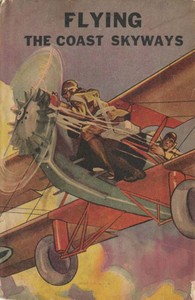
That winter stillness in Pan Michael stayed with me—how silence can feel heavier than speech, holding all the unsaid things. It reminded me of another quiet patience, the watchfulness before motion in Flying the Coast Skyways; Or, Jack Ralston's Swift Patrol — Story, Setting & Ideas. Both felt like waiting rooms where the calm itself promises something stirring just beyond.
Use these questions to collect your thoughts before moving on.