About 170 minutes
The Yellow Phantom A Judy Bolton Mystery — Reading Companion
Historical Psychological Social Fiction
38,956 recorded words. 2 minutes difference from this book's estimate.
View Gutenberg source #47989
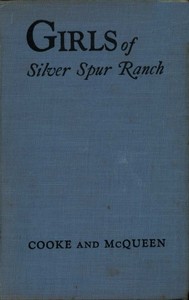
The Girls of Silver Spur Ranch — Context and Discussion can be approached with a clearer sense of reading commitment from its source measurements: 39,511 words, 2 hr 52 min estimated reading time, and 6 detected text sections.
The text analysis averages about 17.7 words per sentence, while the detected sections provide another way to judge how the source is divided.
Project Gutenberg metadata also associates the work with “Orphans -- Juvenile fiction,” connecting these edition facts with the source record’s subject description.
Explore this collection
These alternatives are selected using recorded categories and estimated reading time.
About 170 minutes
Historical Psychological Social Fiction
38,956 recorded words. 2 minutes difference from this book's estimate.
View Gutenberg source #47989About 226 minutes
Historical Psychological Social Fiction
51,786 recorded words. 54 minutes difference from this book's estimate.
View Gutenberg source #52946About 228 minutes
Historical Psychological Social Fiction
52,402 recorded words. 56 minutes difference from this book's estimate.
View Gutenberg source #44951Search stored excerpts and compare books → Choose by your preferences →
Choices use stored catalog measurements. Estimates vary with reading speed. A shared category is a catalog label, not a claim that two books have the same argument or literary quality.
Search reads excerpt text stored with this catalog and links to its associated Gutenberg record. The connection is stored in the site database; this tool does not recheck that every excerpt is word-for-word identical to that external record. Excerpt search does not cover every chapter and does not verify historical publication dates.
Catalog snapshot checked: 2026-09-25. Coverage: 95 public books, 95 available source excerpts.
Calculated from edition completeness, EPUB availability, text structure and catalogue metadata. Not a user rating.
Total of 100 points, scaled to a 2.5-5.0 range. Editions with an empty description or a missing EPUB file are not scored.
Public-domain source text
The source text is kept in the dedicated reader, separate from this catalogue record and its commentary.
The first chapter of The Girls of Silver Spur Ranch opens not with a cattle drive or a war, but with wedding sewing. The eldest sister Mary is hemming a ruffle while Elizabeth, the second daughter, embroidering a pillow, complains that the family name Spooner is “horrid, commonplace.” Elizabeth has already renamed the ranch Silver Spur and hung a silver-leafed spur over the door—a detail that draws laughter from neighbors and scorn from the cowboy Jonah Bean, who calls it “The Tin Spoon.” The excerpt establishes a domestic, voice-driven scene, with dialogue that reveals character through opinion rather than action.
Elizabeth’s fixation on names is the most developed trait in the opening pages. She envies Mary’s future married name, Bellamy, and wishes her father had chosen a fleur-de-lys for the ranch brand instead of a spoon. The narrative voice aligns with her perspective, noting that “Elizabeth always had her own way.” Cousin Hannah Pratt describes the other sisters as “as much alike as biscuits cut out of the same batch of dough,” while Elizabeth is tall, fair, and wears her hair in a coronet. The contrast sets her apart as the character most concerned with how things appear—a theme that may carry through the novel.
Later excerpts shift to a plot involving a lost diamond ring and a hundred dollars earned by the sisters. Ruth, the plump and smiling sister, retrieves the ring from a lump of adobe clay found in her pony’s hoof. The ring’s owner, Maudie Pratt, rejects it with a tantrum, revealing she had lied about its value—it cost twenty-five dollars, not a hundred. The sisters’ secret earning of the money is praised by their mother as “an achievement any three young persons of your age may well be proud of.” The scene is theatrical, with Ruth’s dramatic reveal and Maudie’s tears, and it introduces conflict between the Spooner and Pratt families.
The catalog lists orphans, the Spanish-American War, and Western stories as subjects, but none appear in the excerpts. The setting is a Texas cattle-farm, described through small details: a winding level road, a lavender sky with “big, white stars of the plains country,” and a Thanksgiving dinner at the McGregor ranch. The war and orphan themes may emerge later, but the text so far is domestic and social, focused on family labor, neighborly visits, and disputes over money and jewelry. Readers expecting frontier adventure or wartime drama will find instead a story of sisters negotiating reputation and resources within a tight community.
The excerpts offer a narrow window into the novel’s first six chapters, centered on Elizabeth’s aesthetic sensibilities and a ring-centered quarrel. Readers should approach the catalog subjects with caution: the Spanish-American War and orphan status are not yet introduced, and the Western setting serves as backdrop rather than driver of plot. The sisters’ collective enterprise—earning a hundred dollars—hints at resourcefulness that may shape later events, but the full scope of the story remains to be seen.
I keep thinking about the Spooner sisters bent over their sewing, the lost ring waiting under a Texas floorboard, and how quietly a family story can turn. It reminded me of another old tale, Dick Merriwell's Pranks; Or, Lively Times in the Orient — A Reader’s Guide, where mischief also unfolds in that same unhurried, episodic way—small pleasures, small troubles, no need for the world to change by evening.
Use these questions to collect your thoughts before moving on.