About 228 minutes
The Motor Boys in Strange Waters; or, Lost in a Floating Forest — Background and Themes
Historical Psychological Social Fiction
52,402 recorded words. 2 minutes difference from this book's estimate.
View Gutenberg source #44951
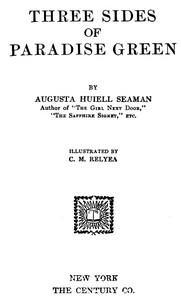
Before opening Three Sides of Paradise Green — Inside the Classic, the edition data offers a quick orientation: 51,786 words, 3 hr 46 min estimated reading time, and 5 detected text sections.
The text analysis averages about 15.9 words per sentence, while the detected sections provide another way to judge how the source is divided.
Project Gutenberg metadata also associates the work with “Diary fiction,” connecting these edition facts with the source record’s subject description.
Explore this collection
These alternatives are selected using recorded categories and estimated reading time.
About 228 minutes
Historical Psychological Social Fiction
52,402 recorded words. 2 minutes difference from this book's estimate.
View Gutenberg source #44951About 228 minutes
Historical Psychological Social Fiction
52,347 recorded words. 2 minutes difference from this book's estimate.
View Gutenberg source #45804About 240 minutes
Historical Psychological Social Fiction
55,095 recorded words. 14 minutes difference from this book's estimate.
View Gutenberg source #53440Search stored excerpts and compare books → Choose by your preferences →
Choices use stored catalog measurements. Estimates vary with reading speed. A shared category is a catalog label, not a claim that two books have the same argument or literary quality.
Search reads excerpt text stored with this catalog and links to its associated Gutenberg record. The connection is stored in the site database; this tool does not recheck that every excerpt is word-for-word identical to that external record. Excerpt search does not cover every chapter and does not verify historical publication dates.
Catalog snapshot checked: 2026-09-25. Coverage: 95 public books, 95 available source excerpts.
Calculated from edition completeness, EPUB availability, text structure and catalogue metadata. Not a user rating.
Total of 100 points, scaled to a 2.5-5.0 range. Editions with an empty description or a missing EPUB file are not scored.
Public-domain source text
The source text is kept in the dedicated reader, separate from this catalogue record and its commentary.
The journal begins with a specific classroom prompt: Miss Cullingford, the English instructor, urges her students to keep a record of “the things that happen around us and our ideas about people.” The narrator, one of two girls, initially protests that nothing interesting occurs in their quiet life. This opening not only establishes the diary format but also sets up a tension between ordinary life and the mystery that will soon disrupt it. Readers are immediately placed inside a first-person voice that is colloquial, self-aware, and occasionally petulant—a voice that will shape how clues and conflicts are filtered.
The first excerpt reveals that the journal is not a spontaneous decision but a direct response to a teacher’s suggestion. The narrator explicitly contrasts her own record with “the kind of diary affair that some people keep,—all about the weather and the number of jars of jam they put up.” This meta-commentary signals that the text will be selective and event-driven. The teacher’s influence also introduces a literary self-consciousness: the narrator is aware she is creating a document that might be of interest. The opening pages thus serve as a framing device, alerting readers to pay attention to what is deemed worth recording—and what is omitted.
The narrator’s voice is distinctive: she uses dashes, exclamations, and colloquial phrases like “the Imp” (a nickname for a third girl). Her tone shifts from enthusiasm to frustration, as when she reports being called “children” by the Imp in a patronizing manner. The diary format allows for immediate emotional reactions—anger, pride, curiosity—without the filter of retrospection. Readers see the narrator’s limited perspective in real time. For instance, she admits being “too tired to write much more” but still includes a crucial detail about the Imp’s cryptic remark. This technique keeps the reader close to the narrator’s evolving understanding, making the mystery unfold as she discovers it.
By the middle excerpts, the diary has moved beyond daily trivialities into a layered mystery involving a portrait, a “Monsieur,” and references to the dauphin. The narrator and her friend Carol research history, but the Imp claims to have uncovered “three points” they have missed. The mystery is not presented all at once; it emerges through conversations, library research, and the characters’ rivalries. The setting—a “shut-off spot around the Green”—creates a contained world where small discoveries feel significant. The diary entries record both progress and dead ends, such as the two-week gap with “nothing special” happening. This pacing mirrors the slow, uneven process of investigation.
The relationship among the three girls is central to the narrative’s dynamic. The narrator and Carol work together, but the Imp—who is “still his favorite” of Monsieur—alternates between ally and antagonist. The diary captures the sting of the Imp’s condescension: “You were trying to be patronizing, weren't you?” The girls’ competition for knowledge and status adds a social layer to the intellectual puzzle. Readers must weigh each girl’s reliability and motives. The narrator’s frustration is palpable, yet she concedes, “I can't help but believe the Imp.” This tension suggests that the resolution may depend on cooperation—or on one girl’s hidden knowledge.
As you read, note how the diary form shapes what you learn and when. The narrator’s voice is your only window; her biases, gaps, and emotional reactions are part of the evidence. Pay attention to what she chooses to record—and what she dismisses as unimportant. The mystery unfolds not through omniscient narration but through the limited, sometimes unreliable perspective of a young diarist. This structure invites you to read between the lines, comparing the narrator’s interpretations with the clues she provides.
Reading Three Sides of Paradise Green again, I found myself lingering on how Seaman lets the diary’s blank spaces speak louder than its entries. That quiet patience—waiting for a puzzle to reveal itself—reminded me of the gentle trust in Joan of the Journal — Themes and Context, where her voice waits, too, like an old friend letting you find your own way at your own pace. It felt familiar, like a porch light left on. Joanie wasn’t in a hurry either.
Build a private reading journal entry for this title.