About 170 minutes
The Yellow Phantom A Judy Bolton Mystery — Reading Companion
Historical Psychological Social Fiction
38,956 recorded words. 77 minutes difference from this book's estimate.
View Gutenberg source #47989
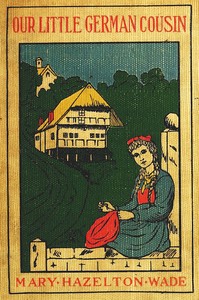
Our Little German Cousin — Reading Companion can be approached with a clearer sense of reading commitment from its source measurements: 21,196 words, 1 hr 33 min estimated reading time, and 3 detected text sections.
The text analysis averages about 13.8 words per sentence, while the detected sections provide another way to judge how the source is divided.
Project Gutenberg metadata also associates the work with “Family -- Juvenile fiction,” connecting these edition facts with the source record’s subject description.
Explore this collection
These alternatives are selected using recorded categories and estimated reading time.
About 170 minutes
Historical Psychological Social Fiction
38,956 recorded words. 77 minutes difference from this book's estimate.
View Gutenberg source #47989About 172 minutes
Historical Psychological Social Fiction
39,511 recorded words. 79 minutes difference from this book's estimate.
View Gutenberg source #44576About 226 minutes
Historical Psychological Social Fiction
51,786 recorded words. 133 minutes difference from this book's estimate.
View Gutenberg source #52946Search stored excerpts and compare books → Choose by your preferences →
Choices use stored catalog measurements. Estimates vary with reading speed. A shared category is a catalog label, not a claim that two books have the same argument or literary quality.
Search reads excerpt text stored with this catalog and links to its associated Gutenberg record. The connection is stored in the site database; this tool does not recheck that every excerpt is word-for-word identical to that external record. Excerpt search does not cover every chapter and does not verify historical publication dates.
Catalog snapshot checked: 2026-09-25. Coverage: 95 public books, 95 available source excerpts.
Calculated from edition completeness, EPUB availability, text structure and catalogue metadata. Not a user rating.
Total of 100 points, scaled to a 2.5-5.0 range. Editions with an empty description or a missing EPUB file are not scored.
Public-domain source text
The source text is kept in the dedicated reader, separate from this catalogue record and its commentary.
The preface of Our Little German Cousin primes the reader with a triad of associations—ruined castles, fairies, music, and soldiers—that it claims spring to mind when Germany is mentioned. This opening gambit does not merely set a mood; it establishes a lens through which the ensuing narrative is to be viewed. The preface explicitly links physical ruins to stories of knights and princesses, and the German landscape to fairy folk, gnomes, and water-sprites. A first-time reader should note how this prefatory material shapes expectations for the fictional content that follows, particularly in the way it frames national character through legend and landscape rather than through contemporary social realities.
The preface operates as a compact cultural primer, asserting that Germany is the home of an ancient and brave people. It does not offer a neutral introduction but instead directs the reader to anticipate a narrative steeped in romanticized history and folklore. The mention of ruined castles along the Rhine as storytellers of brave knights and beautiful princesses is a deliberate choice that colors the subsequent fiction. A first-time reader should be alert to how this frame may simplify or idealize the country's past. The preface also introduces the concept of the 'German cousin' as a figure of wonder, listening to legends of giants and enchanters. This framing device suggests that the book will prioritize a mythologized version of Germany over a detailed, realistic portrayal of contemporary life.
In the middle excerpt, the narrative shifts into a historical anecdote about Frederick the Great, told by the character Hans to Bertha. This embedded story occupies a significant portion of the text and is presented as a lesson in national character. Hans recounts Frederick's daily routine, his love of music, his habit of marking favorite dishes with a cross, and his famous response to a caricature of himself. The anecdote is framed as something Hans tells Bertha because she is a girl, while he prefers war stories. This moment of metafiction—a story within a story—offers a window into how the book constructs German identity through the lens of a revered monarch. The reader should consider how this historical digression functions as a pedagogical tool, reinforcing values of hard work, humor, and loyalty. The tale also illustrates the book's method of blending instruction with narrative, a hallmark of the 'Little Cousin' series.
The later excerpt presents a Sunday afternoon family walk that culminates in a request for a story. The setting—a cascade in a wooded area—is described with sensory details: sweet smells, gaily singing birds, and an atmosphere of peace and joy. This scene is a microcosm of the book's approach: a natural, picturesque backdrop becomes the stage for oral storytelling. Bertha nestles close to her father and asks for a tale, mirroring the reader's own position as a listener. The passage emphasizes the communal and familial context of narrative, suggesting that stories are not merely entertainment but a means of bonding and transmitting cultural knowledge. The reader should note how the book consistently returns to the act of storytelling itself, whether through the preface, historical anecdotes, or family scenes. This self-referential quality invites the reader to reflect on the purpose and power of the tales being told.
Across the excerpts, a consistent structural pattern emerges: a framing device (preface, character dialogue, or descriptive setting) introduces a story-within-a-story. The preface sets up the expectation of fairy tales and legends; Hans's account of Frederick the Great is a direct narrative embedded in conversation; the cascade scene explicitly calls for a story. This layered structure suggests that the book is as much about the act of telling as about the content of the tales. The voice shifts between an omniscient narrator and characters who speak in colloquial, didactic tones. Bertha's father, for instance, uses the imperative 'Let us' to guide the family's actions, while Hans adopts a more exuberant, patriotic tone. The reader should pay attention to how these different voices serve to reinforce the book's educational aims. The recurring motif of storytelling positions the reader as an active participant in a tradition of oral culture, even within a printed text.
A first reading of Our Little German Cousin is best approached with an awareness of its prefatory promises and its layered narrative structure. The book does not aim for a comprehensive portrait of Germany but rather a curated selection of stories that align with the preface's romanticized vision. Readers will find that the most memorable passages are those where characters themselves become storytellers, embedding history and legend within a domestic frame. This editorial note encourages readers to track how each tale within the tale reinforces the cultural ideals introduced at the outset, and to consider what is left out of this carefully constructed picture.
Reading the gentle way this companion walks beside a child through old Germany, I found myself thinking of another quiet lingering—how Marjorie Dean's Romance — Background and Themes stays with you like a familiar room. Both hold that tender kindness, the sense that stories soften us without our noticing. A small warmth, really, like sunlight on a familiar page. It simply rests there, afterward.
Capture what you thought, learned, and would like to remember.