About 365 minutes
Fathers and Sons — Reading Companion
Historical Psychological Social Fiction
83,833 recorded words. 2 minutes difference from this book's estimate.
View Gutenberg source #47935
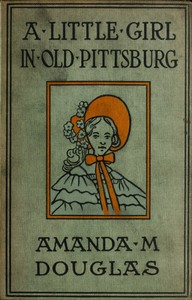
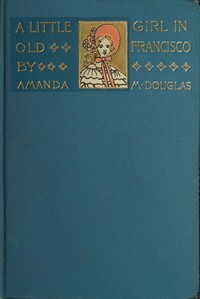
A Little Girl in Old Pittsburg — Themes and Context can be approached with a clearer sense of reading commitment from its source measurements: 83,403 words, 6 hr 3 min estimated reading time, and 8 detected text sections.
The text analysis averages about 12.7 words per sentence, while the detected sections provide another way to judge how the source is divided.
Project Gutenberg metadata also associates the work with “Bildungsromans,” connecting these edition facts with the source record’s subject description.
Explore this collection
These alternatives are selected using recorded categories and estimated reading time.
About 365 minutes
Historical Psychological Social Fiction
83,833 recorded words. 2 minutes difference from this book's estimate.
View Gutenberg source #47935About 356 minutes
Historical Psychological Social Fiction
81,657 recorded words. 7 minutes difference from this book's estimate.
View Gutenberg source #53468About 344 minutes
Historical Psychological Social Fiction
78,908 recorded words. 19 minutes difference from this book's estimate.
View Gutenberg source #41879Search stored excerpts and compare books → Choose by your preferences →
Choices use stored catalog measurements. Estimates vary with reading speed. A shared category is a catalog label, not a claim that two books have the same argument or literary quality.
Search reads excerpt text stored with this catalog and links to its associated Gutenberg record. The connection is stored in the site database; this tool does not recheck that every excerpt is word-for-word identical to that external record. Excerpt search does not cover every chapter and does not verify historical publication dates.
Catalog snapshot checked: 2026-09-25. Coverage: 95 public books, 95 available source excerpts.
Calculated from edition completeness, EPUB availability, text structure and catalogue metadata. Not a user rating.
Total of 100 points, scaled to a 2.5-5.0 range. Editions with an empty description or a missing EPUB file are not scored.
Public-domain source text
The source text is kept in the dedicated reader, separate from this catalogue record and its commentary.
Amanda M. Douglas opens A Little Girl in Old Pittsburg with a child's urgent question—'Why is Kirsty ringing two bells?'—and immediately immerses the reader in a household divided by news of the Revolutionary War's end. Grandfather Carrick's explosive denial of Cornwallis's surrender ('It's a dirty black lee!') sets a tone of stubborn loyalty to the Crown, while Daffodil's uncertainty signals her position between generations. The street is described as 'a rather winding lane with the houses set any way,' built of logs and thatched with straw, grounding the story in a specific, rough-edged frontier settlement. This opening does not merely introduce a setting; it establishes a pattern of competing voices—political, familial, and personal—that the excerpts suggest will shape Daffodil's coming-of-age.
The excerpts capture a household where speech itself is a marker of allegiance. Grandfather Carrick's brogue—'a dirty black lee,' 'tatterdemalions'—contrasts with the more measured tones of Bernard Carrick, who later explains the whiskey tax as a matter of national necessity. Norah is described as 'hotheaded' like Grandad, while Daffodil is advised to 'take pattern by mother and grandmere and have no opinions.' This advice, however, is undercut by the narrative's willingness to let Daffodil hear and report the arguments. The text does not simply reproduce dialect for color; it uses it to dramatize a family split along political lines, with the child caught in the middle. The Whiskey Rebellion is not named outright in these pages, but the 'summons to appear at court' and the distillers' anger place the story squarely in the 1790s, making the domestic dispute a microcosm of national conflict.
Daffodil has returned from a visit to 'that old city'—likely Philadelphia or New York—and her brother Felix resents the change: 'I wish you hadn't gone to that old city. You were twice as good fun before.' The excerpts contrast her urban experiences (theatre, concerts, a dancing class, 'ladies so beautifully dressed') with the rustic life of Pittsburgh, where Felix expects her to 'climb trees or run races.' Bernard Carrick, however, sees Pittsburgh's future: 'boats being built, there's coal and iron ... they're talking about glass even. We shall be the head centre.' This tension between refinement and industry, between the girl who knows 'modern steps' and the girl who used to romp, is not resolved in the excerpts. Instead, the narrative holds both possibilities in view, suggesting that Daffodil's growth will involve negotiating these competing claims on her identity.
Three motifs recur in the excerpts with enough frequency to suggest structural importance. First, whiskey: the tax dispute dominates adult conversation, and Bernard Carrick's business interests are entwined with distilling. Second, horses: Daffodil is praised as 'a good rider,' and a ride with her father becomes an occasion for both intimacy and instruction. Third, the weight of family obligation: Bernard insists Daffodil must 'marry and settle here,' while Grandfather Carrick's political intransigence isolates him. These motifs are not merely decorative; they create a texture of daily life in which economic pressures, physical skill, and filial duty intersect. The excerpts do not reveal how these threads will be woven together, but they establish them as the fabric of Daffodil's world.
Readers approaching A Little Girl in Old Pittsburg should attend to the way Douglas uses domestic scenes to stage larger historical conflicts. The excerpts offer no resolution to the whiskey tax dispute or to Daffodil's future; instead, they present a girl learning to read the competing demands of loyalty, ambition, and affection. The novel's value lies less in plot than in the density of its period detail and the quiet precision with which it renders a child's perspective on adult turmoil.
There’s something touching about Daffodil carrying Pittsburgh’s old ways into a changing world, the weight of loyalty pressing against progress. It reminded me how certain stories let us revisit that ache of growing up—something Judy Bolton’s own quiet dilemmas echo. For anyone who treasures that gentle pull between past and person, The Yellow Phantom A Judy Bolton Mystery — Reading Companion feels like a familiar hand reaching back.
Use these questions to collect your thoughts before moving on.