About 363 minutes
A Little Girl in Old Pittsburg — Themes and Context
Historical Psychological Social Fiction
83,403 recorded words. 7 minutes difference from this book's estimate.
View Gutenberg source #43769
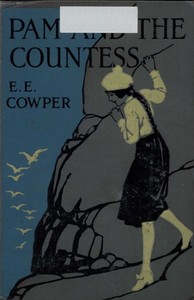
The source record for Pam and the Countess — Edition Insights measures this digital text at 81,657 words, 5 hr 56 min estimated reading time, and 12 detected text sections.
The text analysis averages about 15.6 words per sentence, while the detected sections provide another way to judge how the source is divided.
Project Gutenberg metadata also associates the work with “England -- Juvenile fiction,” connecting these edition facts with the source record’s subject description.
Explore this collection
These alternatives are selected using recorded categories and estimated reading time.
About 363 minutes
Historical Psychological Social Fiction
83,403 recorded words. 7 minutes difference from this book's estimate.
View Gutenberg source #43769About 365 minutes
Historical Psychological Social Fiction
83,833 recorded words. 9 minutes difference from this book's estimate.
View Gutenberg source #47935About 344 minutes
Historical Psychological Social Fiction
78,908 recorded words. 12 minutes difference from this book's estimate.
View Gutenberg source #41879Search stored excerpts and compare books → Choose by your preferences →
Choices use stored catalog measurements. Estimates vary with reading speed. A shared category is a catalog label, not a claim that two books have the same argument or literary quality.
Search reads excerpt text stored with this catalog and links to its associated Gutenberg record. The connection is stored in the site database; this tool does not recheck that every excerpt is word-for-word identical to that external record. Excerpt search does not cover every chapter and does not verify historical publication dates.
Catalog snapshot checked: 2026-09-25. Coverage: 95 public books, 95 available source excerpts.
Calculated from edition completeness, EPUB availability, text structure and catalogue metadata. Not a user rating.
Total of 100 points, scaled to a 2.5-5.0 range. Editions with an empty description or a missing EPUB file are not scored.
Public-domain source text
The source text is kept in the dedicated reader, separate from this catalogue record and its commentary.
E. E. Cowper opens Pam and the Countess with a quiet, absorbed reader: Pamela sits among rocks, chin on hands, a book face-down beside her. The narrator immediately anchors the scene in a specific, almost possessive geography—Bell Bay belongs to Bell House, leaving no room for a sea-front or another house. This tight, jewel-like setting becomes a stage for subtle social observation. Cowper’s diction is precise: the bay is a “wonderful little horse-shoe,” the cliff entrance a “dark setting.” The description is not merely decorative; it establishes a world where every detail, from rock plants to the Temperance Tea Inn, is placed with care. The authorial choices in these opening paragraphs signal a story attentive to place, perception, and the quiet drama of everyday life.
Cowper’s descriptive language is economical yet vivid. The bay is a “jewel of colour,” the sea-wall “high, rough stone.” She avoids generic beauty; instead, she specifies: the rock plants are “tiny,” the gardens “a mass of greenness and bloom.” The valley sides “tower” and “melt away,” giving the landscape a dynamic, almost living quality. This careful diction extends to social spaces: Paramore’s is a “Temperance Tea Inn,” a detail that quietly signals the era’s moral geography. The narrator’s voice is assured, using phrases like “a thought more perfect” to suggest a measured, slightly wry perspective. These choices create a world that feels both real and deliberately composed, inviting the reader to notice how language shapes place.
Cowper’s dialogue reveals character through rhythm and interruption. Aunt A.’s speech is a cascade of half-finished thoughts: “Really, you know, my dear children, I think steps should be taken…” Her sentences trail off into tangles, literally mirrored by Charles the dog winding around a tree. Adrian’s deadpan replies—“I should give him laurel water”—are met with literal-minded gratitude, exposing the aunt’s lack of humour. The comedy arises from misalignment: Aunt A. means well but cannot read tone, while Adrian’s irony sails over her head. Christobel’s interjections (“How could you, Addie?”) ground the scene. Cowper uses dialogue not just to advance plot but to layer social dynamics—politeness, teasing, and genuine affection coexist in the same exchange.
The cliff rescue is rendered through multiple perspectives: Mrs. Ensor’s tearful account, Adrian’s silent investigation, and the boy Reuben’s “disconnected recollections.” Cowper avoids a direct dramatization of the climb, instead filtering it through aftermath. Mrs. Ensor’s dialect—“They ’adn’t a drop of water”—contrasts with the Ashingtons’ polished speech, marking class difference. Her description of Pam wetting her handkerchief on grass to give Reuben moisture is a concrete, unsentimental detail. Adrian’s later survey of the ground (“No time now… but I shall have a try later”) suggests a methodical, protective curiosity. The authorial choice to withhold the rescue itself and present it through echoes and fragments makes the event more resonant, focusing on how others interpret and retell Pam’s act.
Cowper’s narrator maintains a light, observant distance. Phrases like “Charles was not himself, if his normal condition was good temper” blend free indirect style with wry commentary. The narrator knows Charles’s thoughts (“he knew perfectly well that ‘laurel water’ was only a polite name for prussic acid”) but reports them with amused detachment. This technique extends to human characters: Aunt A. “had not the faintest sense of humour, but a very large heart.” The narrator judges without cruelty. In the rescue aftermath, Christobel’s pleasure that Pam is seen as a heroine while Adrian “was trying to make her out something of a criminal” is noted without elaboration. These authorial choices create a voice that is both intimate and ironic, guiding the reader’s sympathy without dictating it.
Cowper’s novel rewards attention to its small, precise details—the way a veil tangles, a dog sulks, a cliff is described as “beastly.” The excerpts suggest a story where character is revealed through action and reaction rather than interior monologue. Readers may find pleasure in tracking how Cowper uses setting as a moral landscape and dialogue as a tool for social comedy. The incomplete text leaves many questions open, but the authorial craft is already evident in these early chapters.
Reading about Pamela’s cliff rescue, I remembered standing on a rainy headland myself, feeling small. The way Cowper captures that quiet gulp before action—Dumps - A Plain Girl — Story, Setting & Ideas stirred the same ache, that sense of a plain girl watching the sea and finding her own steady footing among louder, grander souls.
Save your reaction, strongest insight, and memorable passage.