About 292 minutes
Elizabeth, Her Folks — Text and Context
Historical Psychological Social Fiction
67,008 recorded words. 16 minutes difference from this book's estimate.
View Gutenberg source #53788
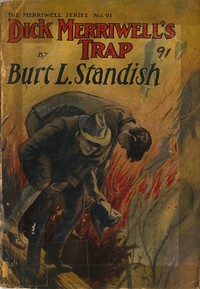
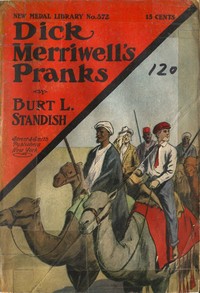
The catalog record for Dick Merriwell's Trap; Or, The Chap Who Bungled — Themes and Context provides practical reading context through 70,711 words, 5 hr 8 min estimated reading time, and 33 detected text sections.
The text analysis averages about 12.2 words per sentence, while the detected sections provide another way to judge how the source is divided.
Project Gutenberg metadata also associates the work with “Schools -- Juvenile fiction,” connecting these edition facts with the source record’s subject description.
Explore this collection
These alternatives are selected using recorded categories and estimated reading time.
About 292 minutes
Historical Psychological Social Fiction
67,008 recorded words. 16 minutes difference from this book's estimate.
View Gutenberg source #53788About 278 minutes
Historical Psychological Social Fiction
63,747 recorded words. 30 minutes difference from this book's estimate.
View Gutenberg source #47646About 343 minutes
Historical Psychological Social Fiction
78,694 recorded words. 35 minutes difference from this book's estimate.
View Gutenberg source #48389Search stored excerpts and compare books → Choose by your preferences →
Choices use stored catalog measurements. Estimates vary with reading speed. A shared category is a catalog label, not a claim that two books have the same argument or literary quality.
Search reads excerpt text stored with this catalog and links to its associated Gutenberg record. The connection is stored in the site database; this tool does not recheck that every excerpt is word-for-word identical to that external record. Excerpt search does not cover every chapter and does not verify historical publication dates.
Catalog snapshot checked: 2026-09-25. Coverage: 95 public books, 95 available source excerpts.
Calculated from edition completeness, EPUB availability, text structure and catalogue metadata. Not a user rating.
Total of 100 points, scaled to a 2.5-5.0 range. Editions with an empty description or a missing EPUB file are not scored.
Public-domain source text
The source text is kept in the dedicated reader, separate from this catalogue record and its commentary.
The opening chapter of Dick Merriwell's Trap; Or, The Chap Who Bungled begins not with action but with a moment of internal temptation: Hal Darrell, holding the ball for Dick to kick a winning goal, briefly considers shifting it to spoil the kick. This moral struggle—set against a football game between Fardale Military Academy and Hudsonville—introduces a pattern of characters wrestling with conscience. The catalog subjects list schools, football, boys, and mystery, but the excerpts emphasize psychological conflict and rivalry over athletic detail. The narrative voice is direct, with frequent use of words like “temptation,” “conquered,” and “master,” suggesting a didactic tone common to early twentieth-century juvenile fiction.
The excerpts repeatedly place characters at moments of ethical choice. Hal Darrell’s temptation to spoil the kick is described in detail: “How easy it would be to spoil that kick! A slight shifting of the ball…” The narrator then explains that Dick himself faced a temptation to punish Hal by leaving him on the bench, but “his better nature conquered.” This pattern of temptation and conquest is not limited to the football field. Later, in a confrontation with Chester Arlington, Dick speaks “like one who felt himself entire master of the situation,” and the narrator notes that “this air of perfect assurance… marked Dick as one different from most lads.” The moral framework is explicit: characters are judged by their ability to resist wrongdoing, and the narrative rewards self-control.
The longest excerpt depicts a tense verbal duel between Dick and Chester Arlington in the latter’s room. Chester tries to provoke Dick into a physical attack, but Dick refuses: “I shall not touch you in this room, but if you continue your insulting epithets I shall call you to account elsewhere.” The scene is built on threats, accusations, and psychological pressure rather than fisticuffs. Dick accuses Chester of gambling with Fred Kennedy and being a traitor to the school. Chester responds with sneers and bluster, invoking his father’s name: “My father is D. Roscoe Arlington.” The narrator emphasizes that Dick’s “steady look” and “quiet assurance” give him power. This suggests that the story values verbal mastery and moral authority over brute force, even in a boys’ adventure novel.
The excerpts establish a clear social world within Fardale Military Academy. Characters are defined by their roles on the football team, their positions on committees, and their family names. Chester repeatedly uses his father’s name as a claim to status, while Dick’s authority comes from his reputation and self-control. The setting includes specific locations: the football field, the grand stand where June Arlington sits, Murphy’s saloon at The Harbor, and Chester’s room. The mention of “the athletic committee” and “the faculty” indicates a structured school environment with formal bodies. The mystery catalog subject is hinted at by Dick’s discovery of proof against Chester, but the excerpts do not reveal what that proof is or how it was obtained.
Readers approaching Dick Merriwell's Trap should attend to the moral lessons embedded in every conflict. The excerpts show that the story is less about football or mystery than about character testing and self-mastery. The title’s “trap” may refer to a scheme Dick sets, but the excerpts only show him confronting Chester directly. The full novel likely resolves the gambling accusation and the athletic committee struggle, but the excerpts leave the outcome uncertain. This edition preserves the original 1902 text, including period language and attitudes.
Reading about Dick Merriwell's quiet confrontation brought back a memory of sitting on my uncle's porch, the evening light fading off the page. It's the same feeling I got with The Sky Detectives; Or, How Jack Ralston Got His Man — Text and Context, where patience, not shouting, untangles a knot. There's something deeply satisfying in that—watching a steady hand hold the line.
Your answers remain private and are stored only in this browser.