About 344 minutes
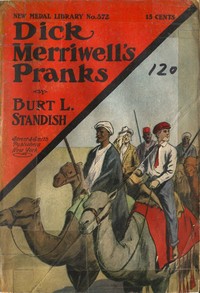
Dick Merriwell's Pranks; Or, Lively Times in the Orient — A Reader’s Guide
Historical Psychological Social Fiction
78,908 recorded words. 1 minutes difference from this book's estimate.
View Gutenberg source #41879
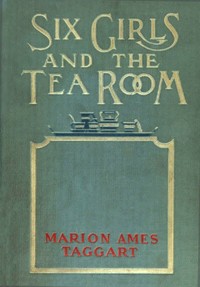
For Six Girls and the Tea Room — Reading Companion, the stored edition analysis reports 78,694 words, 5 hr 43 min estimated reading time, and 8 detected text sections.
The text analysis averages about 16.0 words per sentence, while the detected sections provide another way to judge how the source is divided.
Project Gutenberg metadata also associates the work with “New York (N.Y.) -- Juvenile fiction,” connecting these edition facts with the source record’s subject description.
Explore this collection
These alternatives are selected using recorded categories and estimated reading time.
About 344 minutes
Historical Psychological Social Fiction
78,908 recorded words. 1 minutes difference from this book's estimate.
View Gutenberg source #41879About 356 minutes
Historical Psychological Social Fiction
81,657 recorded words. 13 minutes difference from this book's estimate.
View Gutenberg source #53468About 363 minutes
Historical Psychological Social Fiction
83,403 recorded words. 20 minutes difference from this book's estimate.
View Gutenberg source #43769Search stored excerpts and compare books → Choose by your preferences →
Choices use stored catalog measurements. Estimates vary with reading speed. A shared category is a catalog label, not a claim that two books have the same argument or literary quality.
Search reads excerpt text stored with this catalog and links to its associated Gutenberg record. The connection is stored in the site database; this tool does not recheck that every excerpt is word-for-word identical to that external record. Excerpt search does not cover every chapter and does not verify historical publication dates.
Catalog snapshot checked: 2026-09-25. Coverage: 95 public books, 95 available source excerpts.
Calculated from edition completeness, EPUB availability, text structure and catalogue metadata. Not a user rating.
Total of 100 points, scaled to a 2.5-5.0 range. Editions with an empty description or a missing EPUB file are not scored.
Public-domain source text
The source text is kept in the dedicated reader, separate from this catalogue record and its commentary.
The tea room of the title does not appear in the first chapter; instead, readers encounter the Patty-Pans flat and its elastic capacity for shelter. When Aunt Keren arrives, burned out of her fireproof apartment, she describes her escape with a basket of heirloom silver and a borrowed automobile coat that makes her feel like a Rogues' Gallery exhibit. The Scollard sisters respond not with questions about insurance but with embraces and offers of beds, reshuffling rooms to accommodate her. The author establishes a pattern: crises are met with immediate, practical warmth, while the humor of the situation—such as Miss Keren's wry reference to Azucena in Il Trovatore—is allowed to coexist with genuine distress.
The Scollard home is defined by its ability to stretch. Mrs. Scollard's phrase “the elastic Patty-Pans can always take in another” is not mere sentiment; the chapter shows the family reconfiguring sleeping arrangements on the spot. Gretta, who occupies a former storeroom, is asked to move into the older girls' room so that Bob can take her room and Aunt Keren can have Bob's. The logistics are handled without complaint, and the only mishap is Polly dropping the sugar bowl. This elasticity is a structural principle: the family's love is a fixed quantity, but their physical space is perpetually renegotiated. The tea room, when it appears, will likely extend this principle into a commercial venture—a way of making the home's warmth available to outsiders.
Miss Keren Bradbury speaks in a voice distinct from the Scollards' effusive warmth. She describes her loss with a “whimsical twist of the lips” and calls her borrowed coat an “extraordinary garment” that made subway passengers stare. Her offer to winter in the Ark—the family's old furniture storage—is half-serious, and she quotes the gypsy Azucena's plea to “go back to our mountains” from Il Trovatore. This literary reference, combined with her precise account of saving “the smaller pieces of silver that had been in the family for several generations,” marks her as a character who processes disaster through irony and cultural allusion. The Scollards, by contrast, react with tears and exclamations. The tension between these modes—dry wit versus open sentiment—runs through the excerpt and likely shapes the household dynamics.
The fire is not a climax but a catalyst. Miss Keren's apartment house, “supposed to be fireproof,” is reduced to a skeleton, and she arrives with only what she carried: silver, photographs, her mother's Bible. The Scollards' first question is not about the fire's origin but about her safety. Bob, however, asks about insurance, and his mother asks how it started—two practical queries that the narrative notes but does not prioritize. The fire serves to bring Aunt Keren into the household permanently, setting up the conditions for the tea room venture. The author uses the disaster to showcase character: Miss Keren's composure under loss, the girls' immediate hospitality, and the family's ability to absorb shock without losing their domestic rhythm. The tea room, when it appears, will be built on this foundation of makeshift resourcefulness.
Readers should attend to the way the author balances multiple registers: the sentimental (Happie's “streaming eyes”), the comic (the automobile coat), and the practical (room reassignments). The tea room, when it materializes, will likely be another elastic container—a space where the family's values of hospitality and resourcefulness are tested in a commercial setting. The opening chapter establishes that for the Scollards, home is not a fixed address but a set of relationships that can expand to include anyone in need.
Sometimes Aunt Keren’s dry wit reminds me of how a quiet voice can hold more warmth than a loud one. That same feeling lingers in Joan of the Journal — Themes and Context, where the unspoken seems to carry the story forward. I found myself thinking of Joan while the girls rushed to set another plate, their fussing a sweet contrast to Keren’s folded hands.
Save your reaction, strongest insight, and memorable passage.