About 99 minutes
Half-A-Dozen Housekeepers: A Story for Girls in Half-A-Dozen Chapters — Reading Notes
Technology Airships Imagined Futures
22,732 recorded words. 16 minutes difference from this book's estimate.
View Gutenberg source #54685
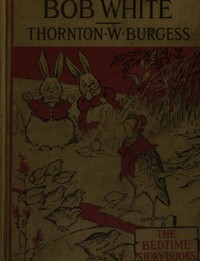
Before opening The Adventures of Bob White — A Reader’s Guide, the edition data offers a quick orientation: 18,960 words, 1 hr 23 min estimated reading time, and 3 detected text sections.
The text analysis averages about 16.4 words per sentence, while the detected sections provide another way to judge how the source is divided.
Project Gutenberg metadata also associates the work with “Animals -- Juvenile fiction,” connecting these edition facts with the source record’s subject description.
Explore this collection
These alternatives are selected using recorded categories and estimated reading time.
About 99 minutes
Technology Airships Imagined Futures
22,732 recorded words. 16 minutes difference from this book's estimate.
View Gutenberg source #54685About 117 minutes
Technology Airships Imagined Futures
26,819 recorded words. 34 minutes difference from this book's estimate.
View Gutenberg source #49686About 37 minutes
Technology Airships Imagined Futures
8,298 recorded words. 46 minutes difference from this book's estimate.
View Gutenberg source #38616Search stored excerpts and compare books → Choose by your preferences →
Choices use stored catalog measurements. Estimates vary with reading speed. A shared category is a catalog label, not a claim that two books have the same argument or literary quality.
Search reads excerpt text stored with this catalog and links to its associated Gutenberg record. The connection is stored in the site database; this tool does not recheck that every excerpt is word-for-word identical to that external record. Excerpt search does not cover every chapter and does not verify historical publication dates.
Catalog snapshot checked: 2026-09-25. Coverage: 95 public books, 95 available source excerpts.
Calculated from edition completeness, EPUB availability, text structure and catalogue metadata. Not a user rating.
Total of 100 points, scaled to a 2.5-5.0 range. Editions with an empty description or a missing EPUB file are not scored.
Public-domain source text
The source text is kept in the dedicated reader, separate from this catalogue record and its commentary.
Thornton W. Burgess opens The Adventures of Bob White with a whistler, not a singer. The first chapter immediately establishes Bob White as a creature defined by sound: his whistle is “clear and cheery,” and it prompts Farmer Brown's boy to whistle back. This call-and-response sets a pattern of communication between human and bird that runs through the book. The narrative voice is direct and affectionate, referring to Bob as “a handsome little fellow” dressed in “brown, white and black.” Yet the opening also introduces a note of danger: Reddy Fox and Redtail the Hawk view Bob as a meal. The story thus balances pastoral warmth with the realities of predation, all within a few paragraphs.
The book’s structure hinges on a repeated contrast between sound and silence, activity and stillness. Bob White is introduced as a “cheerful worker,” and his whistle is explicitly linked to labor: “A cheery whistle or a song / Will help the daily work along.” Burgess returns to this motif in later chapters. When Farmer Brown's boy watches Bob among the potato vines, the bird is silent, focused on eating striped beetles. The whistle, it seems, is reserved for moments of announcement or greeting, not for the business of feeding. This distinction gives the narrative a subtle rhythm: Bob whistles to claim territory or respond to the boy, then falls quiet when hunting. The pattern is consistent enough that a reader can anticipate when the whistle will sound and when it will not.
Much of the action takes place in a single setting: the garden. Burgess uses this limited space to build a series of observational scenes. Farmer Brown's boy “went down to the garden every day to watch” the Bob Whites, and the narrative follows his gaze. In one passage, the boy counts Bob eating “twelve caterpillars” and then calculates the family’s total consumption. The garden becomes a stage where the boy’s understanding shifts from passive appreciation to active arithmetic. The setting is not merely backdrop; it is the source of the book’s central revelation. The boy’s discovery that “figures talk” emerges directly from watching Bob and Mrs. Bob pick bugs off squash vines. The garden’s enclosed, manageable scale makes the counting possible, and Burgess emphasizes this by having the boy work out sums on “a scrap of paper.”
Numbers appear throughout the excerpts with unusual frequency for a children’s story. Farmer Brown's boy counts Bob’s caterpillars (“One, two, three, four, five, six, seven, eight, nine, ten, eleven”), then multiplies by seventeen birds. He later counts cabbage-butterflies caught by Mrs. Bob, cucumber-beetles taken by another bird, and grasshoppers hunted by a third. Each count leads to a larger calculation: “204 caterpillars for one meal,” then “6120” in a month. The numbers are not abstract; they are tied directly to the health of the garden. Burgess uses these figures to make the invisible work of the birds visible. The image of the boy “staring at the figures on the bit of paper with eyes round with wonder” recurs in the reader’s mind, turning arithmetic into a form of discovery.
Burgess shifts point of view between Farmer Brown's boy and the birds, but the transitions are carefully marked. When the boy exclaims “There's the rest of the reason!” aloud, “in a twinkling there wasn't a Bob White to be seen.” The birds react to human speech, but the narrative does not grant them human language. Instead, Burgess shows their behavior through the boy’s eyes: Bob “was eating those striped beetles,” Mrs. Bob “was picking off bugs.” The only interiority given to the birds is implied by their actions. This restraint keeps the story grounded in observable nature. The movement between perspectives is not seamless; it is a deliberate shift that reminds the reader that the boy is an outsider learning to see the garden from the birds’ point of view.
Readers may find it useful to track how often Burgess returns to the act of counting. The arithmetic lesson in Chapter XIV is not an isolated episode; it is the culmination of a series of numerical observations that begin in the first chapter. Pay attention to the moments when Farmer Brown's boy stops to tally what he sees. These pauses are the structural hinges of the book, turning a simple nature story into a quiet argument about the value of attention. The garden, the whistle, and the numbers are all part of a single, patient design.
Years at this desk, and I still recall how Burgess quietly counts the insects Bob White devours. There is arithmetic in that, a ledger of appetite. It reminds me of another counting, the hundred cheerful stories in The Decameron (Day 1 to Day 5) Containing an hundred pleasant Novels — Reading Companion, where plague creates a garden of tale-telling. Both find small, steady songs against trouble.
Your answers remain private and are stored only in this browser.