About 303 minutes
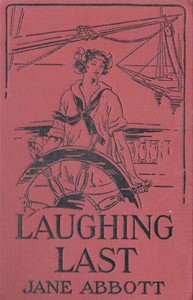
Laughing Last — Themes and Context
Technology Airships Imagined Futures
69,678 recorded words. 26 minutes difference from this book's estimate.
View Gutenberg source #46458
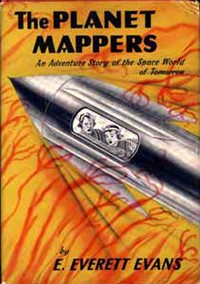
For The Planet Mappers — Reading Companion, the stored edition analysis reports 63,651 words, 4 hr 37 min estimated reading time, and 6 detected text sections.
The text analysis averages about 14.3 words per sentence, while the detected sections provide another way to judge how the source is divided.
Project Gutenberg metadata also associates the work with “Science fiction,” connecting these edition facts with the source record’s subject description.
Explore this collection
These alternatives are selected using recorded categories and estimated reading time.
About 303 minutes
Technology Airships Imagined Futures
69,678 recorded words. 26 minutes difference from this book's estimate.
View Gutenberg source #46458About 247 minutes
Technology Airships Imagined Futures
56,720 recorded words. 30 minutes difference from this book's estimate.
View Gutenberg source #55386About 209 minutes
Technology Airships Imagined Futures
47,974 recorded words. 68 minutes difference from this book's estimate.
View Gutenberg source #53918Search stored excerpts and compare books → Choose by your preferences →
Choices use stored catalog measurements. Estimates vary with reading speed. A shared category is a catalog label, not a claim that two books have the same argument or literary quality.
Search reads excerpt text stored with this catalog and links to its associated Gutenberg record. The connection is stored in the site database; this tool does not recheck that every excerpt is word-for-word identical to that external record. Excerpt search does not cover every chapter and does not verify historical publication dates.
Catalog snapshot checked: 2026-09-25. Coverage: 95 public books, 95 available source excerpts.
Calculated from edition completeness, EPUB availability, text structure and catalogue metadata. Not a user rating.
Total of 100 points, scaled to a 2.5-5.0 range. Editions with an empty description or a missing EPUB file are not scored.
Public-domain source text
The source text is kept in the dedicated reader, separate from this catalogue record and its commentary.
The opening excerpt of The Planet Mappers plunges the reader into a crisis: a meteorite strike punctures the Carver family's spaceboat. Jon Carver, the younger son, reacts with practiced efficiency, plugging the hole with his handkerchief and welding a patch while his father lies unconscious. The narrative voice, marked by Jon's internal exclamation "Leaping tuna!," establishes a colloquial, youthful tone. The family dynamic is immediately clear: Jon is mechanically adept, his brother Jak is not, and their mother is present but initially passive. This scene foregrounds technical problem-solving over character introspection, setting expectations for a story driven by immediate physical threats.
The excerpts reveal a clear division of labor within the Carver family. Jon repeatedly takes charge during emergencies: he repairs the hull breach, later fights crystalline alien growths, and pilots the ship. His brother Jak, though described as "a grand guy," is explicitly characterized as lacking a "mechanical type of mind" and is ineffective in the initial crisis. Their mother, initially shown screaming, later proves capable, firing a shotgun to cover the boys' retreat. The father is injured early and remains absent from the action. This pattern suggests a narrative where competence, not age or gender, determines who acts, though the excerpts do not show whether these roles persist throughout the full novel.
The crystalline life forms encountered on an alien world are described in purely physical terms: they grow rapidly, form pyramidal bases and tentacles, and are vulnerable to bullets but resistant to flame. The boys fight them by smashing with boots and firing guns, treating the encounter as a combat problem rather than a scientific puzzle. The crystals' ability to "grow new crystals wherever needed" and their targeting of the ship's lockdoor suggest a rudimentary intelligence or tropism, but the excerpts offer no explanation of their nature. The catalog subject "Space pirates" does not appear in these passages; the primary threat here is environmental and alien, not human.
The prose is dense with specific technical actions: Jon uses an "oxygen-helium mixture" to replenish air, welds with an "electric torch," and later operates a "flame-gun" and "visiplate." This vocabulary grounds the story in a mid-20th-century vision of space travel, where repairs are manual and immediate. The dialogue and narration employ colloquialisms like "Leaping tuna!" and "worth a dead salmon," giving the characters a folksy, informal register. This combination of technical jargon and casual speech creates a distinctive voice that prioritizes action and practicality over lyrical description, fitting the juvenile adventure genre.
Readers approaching The Planet Mappers should expect a fast-paced narrative focused on physical challenges and family cooperation. The catalog subjects suggest space pirates and juvenile fiction, but the excerpts emphasize survival against natural and alien hazards. The incomplete text leaves questions about the father's injury, the crystals' origin, and the promised pirates unanswered. This edition invites attention to how the Carvers' skills and relationships evolve as the story progresses beyond the provided scenes.
Reading about the Carver family patching hull breaches in the void, I remembered my own father tightening bolts on our drafty old camper before a winter trip—that same quiet competence. It made me think of another story where survival depended on listening to strange corners of a world, much like Asmodeus; or, The Devil on Two Sticks — Context and Discussion once gave me that same sense of hidden mechanisms humming beneath ordinary floors.
Your answers remain private and are stored only in this browser.