About 377 minutes
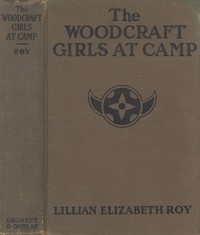
The Woodcraft Girls at Camp — Themes and Context
Technology Airships Imagined Futures
86,656 recorded words. 23 minutes difference from this book's estimate.
View Gutenberg source #47279
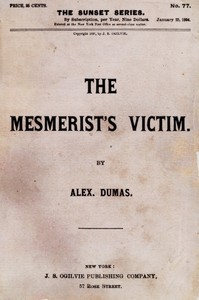
For The Mesmerist's Victim — Context and Discussion, the stored edition analysis reports 91,881 words, 6 hr 40 min estimated reading time, and 10 detected text sections.
The text analysis averages about 15.5 words per sentence, while the detected sections provide another way to judge how the source is divided.
Project Gutenberg metadata also associates the work with “Marie Antoinette, Queen, consort of Louis XVI, King of France, 1755-1793 -- Fiction,” connecting these edition facts with the source record’s subject description.
Explore this collection
These alternatives are selected using recorded categories and estimated reading time.
About 377 minutes
Technology Airships Imagined Futures
86,656 recorded words. 23 minutes difference from this book's estimate.
View Gutenberg source #47279About 369 minutes
Technology Airships Imagined Futures
84,661 recorded words. 31 minutes difference from this book's estimate.
View Gutenberg source #39834About 366 minutes
Technology Airships Imagined Futures
84,051 recorded words. 34 minutes difference from this book's estimate.
View Gutenberg source #53738Search stored excerpts and compare books → Choose by your preferences →
Choices use stored catalog measurements. Estimates vary with reading speed. A shared category is a catalog label, not a claim that two books have the same argument or literary quality.
Search reads excerpt text stored with this catalog and links to its associated Gutenberg record. The connection is stored in the site database; this tool does not recheck that every excerpt is word-for-word identical to that external record. Excerpt search does not cover every chapter and does not verify historical publication dates.
Catalog snapshot checked: 2026-09-25. Coverage: 95 public books, 95 available source excerpts.
Calculated from edition completeness, EPUB availability, text structure and catalogue metadata. Not a user rating.
Total of 100 points, scaled to a 2.5-5.0 range. Editions with an empty description or a missing EPUB file are not scored.
Public-domain source text
The source text is kept in the dedicated reader, separate from this catalogue record and its commentary.
The excerpts from The Mesmerist's Victim reveal a novel more concerned with courtly manipulation than with mesmerism itself. The title figure, Cagliostro, is barely present in the provided passages; instead, the narrative dwells on the cynical maneuvers of Louis XV, the Duc de Richelieu, and Madame Dubarry. The opening chapter sets the story on May 13, 1770, during the wedding of the Dauphin and Marie Antoinette, but the later excerpts shift to private suppers and whispered deals. The catalog subjects list Marie Antoinette, Cagliostro, and Madame Dubarry as fiction subjects, yet the excerpts show Dubarry as a central figure, while Cagliostro remains offstage.
The dialogue attributed to Louis XV in Chapter XXI is strikingly informal and self-deprecating. He complains of being “fagged” and “in brown studies,” and jokes that women “lead us by the nose.” This portrayal contrasts with the formal image of a monarch. The King’s exchange with Richelieu reveals a ruler who is weary of court life and suspicious of his mistress’s motives. When Richelieu suggests sending his man Rafté to check on Dubarry, the King’s concern is less about jealousy than about ensuring she does not “drop in at the Trianon.” The language is blunt: “Dash me if I know how you manage it, duke.” Such phrasing gives the King a colloquial, almost vulgar voice, emphasizing the novel’s focus on behind-the-scenes power struggles rather than regal dignity.
In the earlier excerpt, the Baron de Taverney receives a gift of jewels from the King, delivered by Richelieu. The baron is warned to keep the news from “the Dubarry’s friends,” as she might “quit the King and run away.” This scene establishes a factional divide: the Dubarry party versus those who seek the King’s favor independently. The baron’s daughter, Andrea de Taverney, is mentioned as the subject of a conversation about “virtue,” but her role is not developed in the excerpts. The gift is described with a simile: the baron is “like a child waking up and finding what Santa Claus left in his sock.” This homely comparison undercuts the courtly setting, suggesting a tone of ironic detachment. The focus remains on the transactional nature of royal favor, with jewels as a tangible reward for discretion.
Despite the title, the excerpts contain no direct reference to mesmerism or Cagliostro’s actions. The catalog lists Cagliostro as a fiction subject, but the provided text does not include him. This discrepancy suggests that the mesmerist plot may be confined to later chapters or subplots. The novel’s full title includes “Andrea de Taverney,” and the excerpts focus on her father’s dealings, but Andrea herself appears only as a topic of discussion. Readers should expect a narrative that intertwines court intrigue with a separate thread involving Cagliostro’s influence. The translation by Henry Llewellyn Williams, published in 1894 as part of “The Sunset Series,” preserves archaic spellings (“courteseyed,” “gallopped”) that may affect readability. The text’s origin as a cheap edition is evident from the appended advertisements for house plans.
Readers approaching The Mesmerist’s Victim should be prepared for a historical romance that foregrounds political maneuvering over the occult. The excerpts offer a vivid portrait of Louis XV’s court, but the promised mesmerist remains elusive. Pay attention to the dynamics between the King, Richelieu, and Dubarry, as these relationships drive the plot. The translation’s period flavor and the novel’s serialized origins may require patience with stylistic quirks. The full work likely balances the courtly drama with Cagliostro’s schemes, but the excerpts alone do not reveal how these threads connect.
There’s something a little sad in watching Cagliostro trade wonder for wit, all those courtiers jostling for a king’s glance. It makes me think of quieter afternoons spent with Bob White, where cunning means something gentler. That old Dumas sharpness lingers, yet the countryside feels like remembering sunshine after rain. The Adventures of Bob White — A Reader’s Guide holds that warmth.
Capture what you thought, learned, and would like to remember.