About 209 minutes
The Woman & the Priest — Inside the Classic
Technology Airships Imagined Futures
47,974 recorded words. 15 minutes difference from this book's estimate.
View Gutenberg source #53918
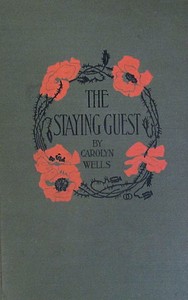
The catalog record for The Staying Guest — Edition Insights provides practical reading context through 44,562 words, 3 hr 14 min estimated reading time, and 7 detected text sections.
The text analysis averages about 17.5 words per sentence, while the detected sections provide another way to judge how the source is divided.
Project Gutenberg metadata also associates the work with “Orphans -- Juvenile fiction,” connecting these edition facts with the source record’s subject description.
Explore this collection
These alternatives are selected using recorded categories and estimated reading time.
About 209 minutes
Technology Airships Imagined Futures
47,974 recorded words. 15 minutes difference from this book's estimate.
View Gutenberg source #53918About 145 minutes
Technology Airships Imagined Futures
33,345 recorded words. 49 minutes difference from this book's estimate.
View Gutenberg source #50014About 247 minutes
Technology Airships Imagined Futures
56,720 recorded words. 53 minutes difference from this book's estimate.
View Gutenberg source #55386Search stored excerpts and compare books → Choose by your preferences →
Choices use stored catalog measurements. Estimates vary with reading speed. A shared category is a catalog label, not a claim that two books have the same argument or literary quality.
Search reads excerpt text stored with this catalog and links to its associated Gutenberg record. The connection is stored in the site database; this tool does not recheck that every excerpt is word-for-word identical to that external record. Excerpt search does not cover every chapter and does not verify historical publication dates.
Catalog snapshot checked: 2026-09-25. Coverage: 95 public books, 95 available source excerpts.
Calculated from edition completeness, EPUB availability, text structure and catalogue metadata. Not a user rating.
Total of 100 points, scaled to a 2.5-5.0 range. Editions with an empty description or a missing EPUB file are not scored.
Public-domain source text
The source text is kept in the dedicated reader, separate from this catalogue record and its commentary.
The story opens with a precise, almost architectural description of Primrose Hall and its two maiden occupants, Priscilla and Dorinda Flint. The narrator’s voice is direct and slightly arch, telling readers exactly what to expect from a lady named Priscilla Flint: “Tall, straight, thin, stiff, formal, prim, smug, demure.” This pattern of naming and then amplifying a character’s traits recurs throughout the excerpts, creating a rhythm of expectation and playful subversion.
Into this rigid household arrives Ladybird, an orphan who announces herself with the simple declaration, “I’m Ladybird, and I’ve come to stay.” The contrast between her impulsive, physical energy and the aunts’ measured decorum drives the early chapters. Ladybird’s movements—climbing shelves, hiding in linen, crying with volcanic force—are described in vivid, almost mechanical detail, as if the narrator is cataloging each disruption.
Ladybird’s first major confrontation with her aunts ends with her perched on the top shelf of a linen closet, “pillowing her head on the dog, and the dog on a pile of sheets.” The scene is typical of the book’s structure: a dispute escalates, Ladybird retreats upward, and the aunts must negotiate her descent. The physical height becomes a metaphor for her stubbornness. When Aunt Priscilla orders her down, Ladybird responds, “the shelves will come down if I try,” turning her disobedience into a practical problem. The aunts, bound by their own rules of order, cannot simply drag her down; they must send for a step-ladder. This pattern of vertical escape and reluctant rescue repeats, suggesting that Ladybird’s power lies in occupying spaces the adults cannot easily reach.
After the closet incident, Ladybird’s mood shifts abruptly when promised “hot waffles and syrup for supper.” The narrator notes, “Every one knows the comforting qualities of hot waffles and syrup,” treating the food as a universal emotional reset. This moment reveals a recurring structural device: a domestic reward or concession that rebalances the story’s conflict. Ladybird does not simply accept the aunts’ terms; she bargains. When offered a children’s party, she first refuses, then reconsiders after the waffles. Her reasoning is practical: she wants a party of “a few people that you can really enjoy,” not a formal dozen. The aunts’ notion of hospitality as duty clashes with her insistence on pleasure. The waffles are not just a treat but a narrative lever that allows the story to pivot from punishment to negotiation.
The excerpts reveal a consistent pattern in dialogue: Ladybird speaks in short, declarative sentences, often interrupting or contradicting her aunts. Aunt Priscilla uses formal, imperative language (“Come down, Lavinia”; “Don’t be silly”), while Aunt Dorinda softens commands with endearments (“Well, dearie”). Ladybird’s responses are rarely apologetic; she explains her crying as a necessary process: “I always have to cry until my tears are all gone.” This matter-of-fact self-awareness contrasts with the aunts’ exasperation. The narrator also inserts wry commentary, such as “Ladybird had no intention of responding to their repeated call,” which aligns the reader with the girl’s perspective. The dialogue thus serves not only to advance plot but to define each character’s verbal territory: the aunts’ rules versus Ladybird’s logic.
Throughout the excerpts, Ladybird is repeatedly placed in or seeks out enclosed spaces: the linen closet, the top shelf, the sofa in the sitting-room. These are not punishments but chosen retreats. The aunts’ house itself is described as a “great white colonial affair” that has “belonged to the Flint family for generations,” suggesting a structure of inherited rules. Ladybird’s movements—climbing, hiding, then emerging—mirror the story’s rhythm of conflict and resolution. Even her dog, Cloppy, is carried into these spaces, a silent companion in her negotiations. The illustrations listed in the contents reinforce this: “Up a Tree,” “In the Apple-tree,” “Ladybird’s flying figure.” The physical world of Primrose Hall is a series of vertical obstacles and hiding places that Ladybird navigates with “monkey-like agility,” turning the aunts’ orderly home into a landscape of tactical retreat.
Readers attentive to the interplay of dialogue and physical action will find that Ladybird’s climbs and bargains are never random; they follow a logic of cause and effect that the narrator makes explicit. The story rewards attention to small details—a promised waffle, a threatened step-ladder—as signals of how power shifts between the characters. The excerpts suggest a work that balances sentiment with a dry, observational humor, and that uses domestic settings as arenas for quiet rebellion.
Reading about Ladybird climbing the ivy at Primrose Hall brought back the summer I spent rearranging my grandmother’s bookshelves, convinced I knew better than her order. That stubborn, affectionate chaos felt familiar. Another book once gave me that same ache — The Trail of the Green Doll A Judy Bolton Mystery — Key Ideas to Explore — where a girl’s curiosity keeps nudging at quiet boundaries, and I remember wishing I could step inside her world too.
Save your reaction, strongest insight, and memorable passage.