About 277 minutes
The Planet Mappers — Reading Companion
Technology Airships Imagined Futures
63,651 recorded words. 30 minutes difference from this book's estimate.
View Gutenberg source #50682
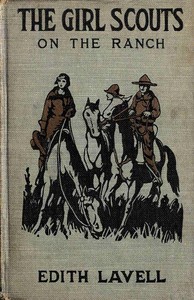
The Girl Scouts on the Ranch — Key Ideas to Explore can be approached with a clearer sense of reading commitment from its source measurements: 56,720 words, 4 hr 7 min estimated reading time, and 33 detected text sections.
The text analysis averages about 13.7 words per sentence, while the detected sections provide another way to judge how the source is divided.
Project Gutenberg metadata also associates the work with “Western stories,” connecting these edition facts with the source record’s subject description.
Explore this collection
These alternatives are selected using recorded categories and estimated reading time.
About 277 minutes
Technology Airships Imagined Futures
63,651 recorded words. 30 minutes difference from this book's estimate.
View Gutenberg source #50682About 209 minutes
Technology Airships Imagined Futures
47,974 recorded words. 38 minutes difference from this book's estimate.
View Gutenberg source #53918About 194 minutes
Technology Airships Imagined Futures
44,562 recorded words. 53 minutes difference from this book's estimate.
View Gutenberg source #45545Search stored excerpts and compare books → Choose by your preferences →
Choices use stored catalog measurements. Estimates vary with reading speed. A shared category is a catalog label, not a claim that two books have the same argument or literary quality.
Search reads excerpt text stored with this catalog and links to its associated Gutenberg record. The connection is stored in the site database; this tool does not recheck that every excerpt is word-for-word identical to that external record. Excerpt search does not cover every chapter and does not verify historical publication dates.
Catalog snapshot checked: 2026-09-25. Coverage: 95 public books, 95 available source excerpts.
Calculated from edition completeness, EPUB availability, text structure and catalogue metadata. Not a user rating.
Total of 100 points, scaled to a 2.5-5.0 range. Editions with an empty description or a missing EPUB file are not scored.
Public-domain source text
The source text is kept in the dedicated reader, separate from this catalogue record and its commentary.
The opening chapter of The Girl Scouts on the Ranch places readers in the midst of Commencement Week at Miss Allen’s Boarding School, where “confusion reigned everywhere” and trunks, dresses, and flowers fill the dormitories. The narrative quickly establishes Marjorie Wilkinson and Lily Andrews as seniors responsible for social events, but the story’s trajectory soon shifts westward. Despite the catalog subject “Ranch life,” the first third of the book unfolds at school and the New Jersey shore, introducing John Hadley, a radio expert, and Dorothy Snyder, a quiet young woman with a secret. The ranch setting does not appear until Chapter VI, and even then, the plot intertwines scout activities with romantic subplots and technological themes—particularly radio, which John installs and which becomes a plot device. The catalog’s “Western stories” label fits only partially, as the novel balances multiple settings and concerns.
The catalog assigns this book to “Technology, Airships & Imagined Futures,” a category that seems at odds with a ranch story. Yet the excerpts reveal that radio is a significant element. John Hadley is an “expert on radio outfits” who has risen in his company due to “the increased demand for this new modern invention.” His work involves inspecting and installing large radio sets, and his conversations with Dorothy touch on his career. The novel thus grafts contemporary technology onto a Western setting, suggesting that the ranch is not isolated from modernity. The radio likely serves as a means of communication or a plot device in later chapters, though the excerpts do not reveal its full role. This blend of frontier life and early twentieth-century innovation reflects the era’s fascination with technology and its potential to connect remote places.
Dorothy Snyder is introduced as a quiet, well-bred young woman living with John’s mother. Her “blue eyes, with the dark shadows under them” and her “wistful way of keeping the conversation away from herself” mark her as a character with a hidden past. When John expresses that he and his mother want her to stay, she responds, “Then I can’t stay,” and insists she is “not free.” She denies being engaged or married but refuses to explain. This mystery drives much of the interpersonal tension in the excerpts. The catalog subject “Young women — Societies and clubs” does not directly apply to Dorothy, who is not a Girl Scout; her story runs parallel to the scout narrative. The novel thus uses her secret to create suspense and to explore themes of obligation and freedom, distinct from the scout activities.
The Girl Scout framework is present from the title and chapter headings like “THE SCOUT MEETING” and “MARJORIE’S GOOD TURN.” However, the excerpts focus more on social dynamics—commencement festivities, romantic interests, and friendships—than on scout skills or outdoor life. The ranch setting, when it appears, likely provides opportunities for scout-like activities, but the early chapters emphasize relationships and personal growth. The catalog subject “Girl Scouts — Juvenile fiction” is accurate, but the novel also functions as a social story about young women navigating friendships, family, and emerging adulthood. The scout element is woven into a broader narrative of character development, with Marjorie and Daisy’s actions reflecting scout values of helpfulness and loyalty, as seen in Marjorie’s concern for others and John’s desire to assist Dorothy.
Readers approaching The Girl Scouts on the Ranch should expect a story that moves between school, shore, and Western landscapes, with radio technology and a mysterious subplot involving Dorothy Snyder. The scout theme is present but not dominant in the early chapters; the novel balances adventure, romance, and contemporary concerns. Pay attention to how the radio and Dorothy’s secret are resolved, as they may be central to the plot’s later developments. The book offers a snapshot of 1920s youth culture and the expanding role of technology in everyday life.
Sometimes a story stays with you less for its plot than for how gently it holds friendship's quiet work—those small, steady gestures that outlast the adventure itself. That's what The Girl Scouts on the Ranch left in me, and I felt something familiar again wandering through The Decameron (Day 1 to Day 5) Containing an hundred pleasant Novels — Reading Companion, where each tale feels like someone handing you a lantern for the dark.
Save your reaction, strongest insight, and memorable passage.