About 369 minutes
After the Divorce: A Romance — Reading Companion
Technology Airships Imagined Futures
84,661 recorded words. 8 minutes difference from this book's estimate.
View Gutenberg source #39834
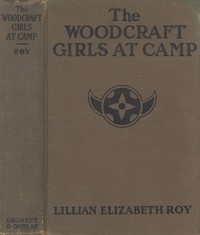
The Woodcraft Girls at Camp — Themes and Context can be approached with a clearer sense of reading commitment from its source measurements: 86,656 words, 6 hr 17 min estimated reading time, and 8 detected text sections.
The text analysis averages about 16.2 words per sentence, while the detected sections provide another way to judge how the source is divided.
Project Gutenberg metadata also associates the work with “Camping -- Juvenile fiction,” connecting these edition facts with the source record’s subject description.
Explore this collection
These alternatives are selected using recorded categories and estimated reading time.
About 369 minutes
Technology Airships Imagined Futures
84,661 recorded words. 8 minutes difference from this book's estimate.
View Gutenberg source #39834About 366 minutes
Technology Airships Imagined Futures
84,051 recorded words. 11 minutes difference from this book's estimate.
View Gutenberg source #53738About 400 minutes
Technology Airships Imagined Futures
91,881 recorded words. 23 minutes difference from this book's estimate.
View Gutenberg source #42690Search stored excerpts and compare books → Choose by your preferences →
Choices use stored catalog measurements. Estimates vary with reading speed. A shared category is a catalog label, not a claim that two books have the same argument or literary quality.
Search reads excerpt text stored with this catalog and links to its associated Gutenberg record. The connection is stored in the site database; this tool does not recheck that every excerpt is word-for-word identical to that external record. Excerpt search does not cover every chapter and does not verify historical publication dates.
Catalog snapshot checked: 2026-09-25. Coverage: 95 public books, 95 available source excerpts.
Calculated from edition completeness, EPUB availability, text structure and catalogue metadata. Not a user rating.
Total of 100 points, scaled to a 2.5-5.0 range. Editions with an empty description or a missing EPUB file are not scored.
Public-domain source text
The source text is kept in the dedicated reader, separate from this catalogue record and its commentary.
From its opening call of "Ooo-ooh! Oo-ooh! Nita!" the novel establishes a voice that is both colloquial and purposeful. Suzanne "Zan" Baker's impatient summons and Mrs. Brampton's immediate shift to a "petulant look" and complaint about her daughter being "a sore trial" set up a pattern of adult exasperation versus youthful energy. Roy's dialogue carries the narrative: characters often explain practical matters—like the cost comparison between renting summer cottages and buying a farm—through extended speech rather than authorial summary. This technique gives the girls a sense of agency while embedding the book's instructional content on camping, farming, and woodcraft.
Roy frequently uses characters' conversations to deliver factual information. When Zan explains that her father paid for the farm with what would have been "two Summers' outing" costs, and that they had "more first-class food produced at the farm, and for next to no cost," the economic argument is placed in a girl's voice, not a narrator's. Similarly, Miss Miller's comments on soil nourishment and tomato trellises blend guidance with natural speech. The dialogue often includes direct questions—"What do you call this—and this here!"—that prompt answers and keep the instructional tone from becoming a lecture. This choice makes the book feel like a shared learning experience among the characters rather than a manual.
Roy's descriptions of the farm and garden are precise and sensory. She notes the "cluster of bright green tomatoes," the "tiny white flower on its head" of chick-weed, and the way "the squash vines haven't enough soil to nourish the roots." These details are not merely decorative; they serve as cues for the characters' activities. When Miss Miller examines a stem "where it entered the earth," the action is both observational and instructive. The author avoids generic praise of nature, instead grounding the setting in specific plants, their conditions, and the work required to maintain them. This specificity gives the reader a concrete sense of place and the routines of camp life.
Mrs. Brampton's early complaint that Nita "never accomplish anything without confusion to others" introduces a recurring friction between adult expectations and the girls' independence. Roy does not resolve this tension quickly; instead, she lets the mother's aggrieved tone contrast with Zan's cheerful practicality. When Zan changes the subject to avoid "a long harangue on Nita's shortcomings," the narrative aligns with the girls' perspective. The author uses these small exchanges to build character without overt moralizing. The girls' enthusiasm—"I just love the country and everything in it—that's why!"—is set against adult worries, creating a dynamic that feels true to the age group.
The chapters move from choosing a camp site to specific tasks like weeding lettuce or identifying squash. Roy organizes the narrative around problems to solve: the girls discover a vine they mistake for pumpkin, learn it is summer squash, and then discuss when to pick it. This pattern of observation, question, and answer recurs throughout the excerpts. The author also includes moments of shared accomplishment—"My, how nice it looks! And how much better the lettuce seems to be already!"—that reward the characters' efforts. The structure mirrors the woodcraft philosophy of learning by doing, with each chapter presenting a new aspect of outdoor life to explore and master.
Readers will find that Roy's authorial choices—placing instruction in dialogue, grounding description in specific tasks, and letting character voices carry the story—make this more than a simple camping tale. The book rewards attention to how the girls talk about their work and how the adults react. The excerpts suggest a narrative that values practical knowledge and group effort over plot-driven adventure, so approach it as a slow, detailed account of learning to live outdoors.
Reading how the girls in the woodcraft camp brushed off their mothers’ grumbling to chase their own projects, I remembered sitting on my porch with The Girl Scouts on the Ranch and feeling that same stubborn, quiet joy—the way grown-ups’ worries fade when you’re just making something with your hands. The Girl Scouts on the Ranch — Key Ideas to Explore felt like that familiar, sun-warm afternoon.
Save your reaction, strongest insight, and memorable passage.