About 369 minutes
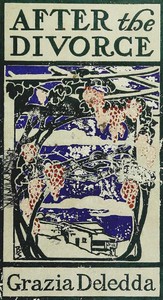
After the Divorce: A Romance — Reading Companion
Technology Airships Imagined Futures
84,661 recorded words. 3 minutes difference from this book's estimate.
View Gutenberg source #39834
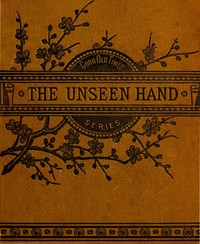
For The Unseen Hand; or, James Renfew and His Boy Helpers — Edition Insights, the stored edition analysis reports 84,051 words, 6 hr 6 min estimated reading time, and 26 detected text sections.
The text analysis averages about 22.8 words per sentence, while the detected sections provide another way to judge how the source is divided.
Project Gutenberg metadata also associates the work with “Christian life -- Juvenile fiction,” connecting these edition facts with the source record’s subject description.
Explore this collection
These alternatives are selected using recorded categories and estimated reading time.
About 369 minutes
Technology Airships Imagined Futures
84,661 recorded words. 3 minutes difference from this book's estimate.
View Gutenberg source #39834About 377 minutes
Technology Airships Imagined Futures
86,656 recorded words. 11 minutes difference from this book's estimate.
View Gutenberg source #47279About 400 minutes
Technology Airships Imagined Futures
91,881 recorded words. 34 minutes difference from this book's estimate.
View Gutenberg source #42690Search stored excerpts and compare books → Choose by your preferences →
Choices use stored catalog measurements. Estimates vary with reading speed. A shared category is a catalog label, not a claim that two books have the same argument or literary quality.
Search reads excerpt text stored with this catalog and links to its associated Gutenberg record. The connection is stored in the site database; this tool does not recheck that every excerpt is word-for-word identical to that external record. Excerpt search does not cover every chapter and does not verify historical publication dates.
Catalog snapshot checked: 2026-09-25. Coverage: 95 public books, 95 available source excerpts.
Calculated from edition completeness, EPUB availability, text structure and catalogue metadata. Not a user rating.
Total of 100 points, scaled to a 2.5-5.0 range. Editions with an empty description or a missing EPUB file are not scored.
Public-domain source text
The source text is kept in the dedicated reader, separate from this catalogue record and its commentary.
The novel opens with a preface that frames James Renfew as an orphan whose mind is "a blank devoid of knowledge, save the idea of the Almighty and the commands of the Decalogue." This stark beginning sets a tone of deprivation, but the narrative voice soon shifts as James encounters the Whitman family and their circle. Kellogg's prose moves between dense exposition—explaining English settlement laws and workhouse practices—and lively dialogue, as when Bertie draws out James's knowledge of road-making and horse-driving. The pacing accelerates in conversational scenes, where characters like Mr. Conly listen with genuine curiosity, contrasting with the earlier, more compressed descriptions of James's suffering.
James Renfew speaks in a measured, factual tone that reflects his workhouse upbringing. When describing road construction, he notes that "one horse would haul as much on that kind of a road as two, yes, as three, on the roads we have here." This precision extends to his explanation of the settlement act: "If a man was born in any parish, his settlement is there." Kellogg gives James a voice that is neither sentimental nor bitter, but exact—a contrast to the more effusive speech of the boy helpers. The narrator occasionally interjects with moral commentary, as when observing that "the discipline to which these high-minded boys... had subjected him" modified James's temper. This layered narration—James's plain testimony, the boys' enthusiasm, and the narrator's asides—creates a polyphonic effect that enriches the reading experience.
The novel's pace varies markedly between chapters. Early sections, such as the preface and initial chapters, compress years of James's life into summary, creating a sense of relentless hardship. Later, extended dialogue scenes slow the tempo, allowing for detailed exchanges about road-building, horse-driving, and parish laws. For instance, the conversation at the Conly home occupies several pages, with James responding to questions about his past work: "I drove one horse first, and then two, and then four, and sometimes six to draw the great roller." This shift from rapid narration to patient dialogue mirrors James's own transition from passive sufferer to active participant. Kellogg uses these slower passages to embed technical information—such as the cost of fines for refusing apprentices—without halting the narrative flow.
Throughout the excerpts, Kellogg returns to the specifics of manual work. James's expertise with horses and road-building is not merely background; it becomes a marker of his competence and a bridge to social acceptance. When Mr. Conly remarks that James knows more about local methods than other scholars, the detail is earned through earlier descriptions of stone-breaking and roller-hauling. The novel also repeats the motif of the "unseen hand"—the preface invokes "a divinity that shapes our ends"—but grounds this abstract idea in concrete acts: a slate with no frame, a promise to bring James again, a book of arithmetic. These small, tangible objects anchor the moral framework in material reality, preventing the story from becoming purely didactic.
Readers attentive to shifts in narrative speed will find that Kellogg uses dialogue not only to advance plot but to embed social commentary. The settlement act explanation, for instance, functions as both character revelation and historical note. Pay particular attention to how James's voice changes when he speaks of work versus when he is spoken about—the contrast illuminates the central tension between his inner resilience and external perceptions.
There’s a particular warmth in watching James Renfew’s grim start slowly soften through small acts of kindness, much like the way a strange, wandering devil in an old tale can’t help but reveal the hidden corners of a city. Both books share that quiet sympathy for the overlooked, for those navigating the world’s odd rules, and so Asmodeus; or, The Devil on Two Sticks — Context and Discussion came to mind while I turned those pages.
Save your reaction, strongest insight, and memorable passage.