About 194 minutes
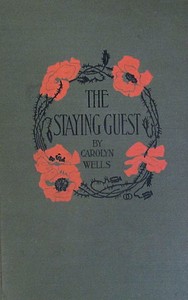
The Staying Guest — Edition Insights
Technology Airships Imagined Futures
44,562 recorded words. 15 minutes difference from this book's estimate.
View Gutenberg source #45545
The source record for The Woman & the Priest — Inside the Classic measures this digital text at 47,974 words, 3 hr 29 min estimated reading time, and 20 detected text sections.
The text analysis averages about 23.4 words per sentence, while the detected sections provide another way to judge how the source is divided.
Project Gutenberg metadata also associates the work with “Italy -- Fiction,” connecting these edition facts with the source record’s subject description.
Explore this collection
These alternatives are selected using recorded categories and estimated reading time.
About 194 minutes
Technology Airships Imagined Futures
44,562 recorded words. 15 minutes difference from this book's estimate.
View Gutenberg source #45545About 247 minutes
Technology Airships Imagined Futures
56,720 recorded words. 38 minutes difference from this book's estimate.
View Gutenberg source #55386About 145 minutes
Technology Airships Imagined Futures
33,345 recorded words. 64 minutes difference from this book's estimate.
View Gutenberg source #50014Search stored excerpts and compare books → Choose by your preferences →
Choices use stored catalog measurements. Estimates vary with reading speed. A shared category is a catalog label, not a claim that two books have the same argument or literary quality.
Search reads excerpt text stored with this catalog and links to its associated Gutenberg record. The connection is stored in the site database; this tool does not recheck that every excerpt is word-for-word identical to that external record. Excerpt search does not cover every chapter and does not verify historical publication dates.
Catalog snapshot checked: 2026-09-25. Coverage: 95 public books, 95 available source excerpts.
Calculated from edition completeness, EPUB availability, text structure and catalogue metadata. Not a user rating.
Total of 100 points, scaled to a 2.5-5.0 range. Editions with an empty description or a missing EPUB file are not scored.
Public-domain source text
The source text is kept in the dedicated reader, separate from this catalogue record and its commentary.
The novel opens with a mother listening at a door, her son—a young priest—moving furtively in the adjoining room. This initial scene establishes a pattern of surveillance and withheld action that governs the narrative. The mother's posture, seated close against the door with clasped hands, introduces a tension between stillness and the urge to intervene. Throughout the excerpts, characters are repeatedly shown waiting, watching, or moving in response to unseen pressures. The wind, described as an incessant, monotonous presence that envelops the house in a creaking invisible band, becomes a constant atmospheric counterpart to the characters' inner turmoil.
The translator's note observes that the story unfolds within two days, a compression that forces events and decisions into a tight frame. The excerpts bear this out: the narrative moves swiftly from the presbytery to the village square, then to a hillside road, with little pause. The priest's ride across the square on horseback, the crowd gathering around Nina Masia, and his sudden spurring of the horse to gallop away all occur in quick succession. This rapid pacing mirrors the mental conflict described in the note—the drama is interwoven with psychological pressure, leaving no room for extended reflection.
Doors and thresholds appear repeatedly as markers of separation and failed communication. The mother listens through a door; Antiochus waits in front of the church; the priest crosses the square and later the river. These physical boundaries echo the characters' emotional isolation. The presbytery itself is described as enveloped by wind, as if the house is bound by an invisible band. The river crossing, where the road becomes a mere path bordered by stones and low walls, further emphasizes the transition from the village to an open but constrained landscape. These images suggest a world where movement is possible but always circumscribed.
The wind is not merely atmospheric but structural: it recurs at key moments, linking scenes and underscoring emotional states. In the opening, it is incessant and monotonous, enveloping the house. Later, as the priest rides, the wind freshens, and the afternoon sun shines on thickets and bushes. The west wind blows sweet and warm, heavy-laden with perfume, as if gathering thyme flowers and wild roses. This sensory detail contrasts with the earlier oppressive wind, marking a shift in the priest's trajectory. The wind's persistence—its ability to carry scent and sound—makes it a continuous presence that binds the landscape to the characters' inner lives.
The narrative oscillates between enclosed spaces and open landscapes, each associated with different kinds of tension. The presbytery rooms are sites of furtive action and waiting; the square becomes a stage for public spectacle, as when Nina Masia is placed on the church steps like a primitive idol. The priest's ride offers a brief release—a desperate craving to gallop away—but the road soon winds upward, bordered by rocks and stunted trees. Even the horizon, spread out before his gaze, remains distant. This alternation between confinement and exposure reinforces the novel's central conflict: the priest is caught between private turmoil and public expectation, with no space that offers true refuge.
Readers attentive to the novel's structure will notice how Deledda uses the wind, thresholds, and rapid scene changes to create a sense of inescapable pressure. The excerpts suggest a work where external events—a miracle, a procession—are filtered through the priest's mounting distress. The two-day timeframe leaves little room for digression; every detail, from the creaking band of wind to the sparkle of the mill-wheel spray, contributes to the mounting tension. This is a narrative that moves with purpose, its imagery tightly woven into the psychological fabric.
Reading about the priest’s two quiet days, all that watching and being watched, I remembered sitting on a porch one summer, unable to finish a book because the wind kept turning the pages—like something wanted me to look up. That restless air reminds me of the hush in The Staying Guest — Edition Insights, where waiting feels almost physical. Both leave you listening, not moving.
Build a private reading journal entry for this title.