About 390 minutes
The Lost Army — Inside the Classic
Young Readers Enchanted Adventures
89,480 recorded words. 10 minutes difference from this book's estimate.
View Gutenberg source #45071
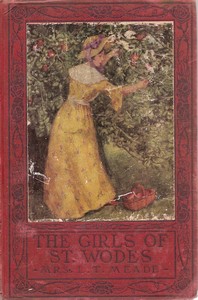
This digital edition of The Girls of St. Wode's — Themes and Context is described by source-level measurements including 91,774 words, 6 hr 40 min estimated reading time, and 8 detected text sections.
The text analysis averages about 13.1 words per sentence, while the detected sections provide another way to judge how the source is divided.
Project Gutenberg metadata also associates the work with “Christian life -- Juvenile fiction,” connecting these edition facts with the source record’s subject description.
Explore this collection
These alternatives are selected using recorded categories and estimated reading time.
About 390 minutes
Young Readers Enchanted Adventures
89,480 recorded words. 10 minutes difference from this book's estimate.
View Gutenberg source #45071About 417 minutes
Young Readers Enchanted Adventures
95,842 recorded words. 17 minutes difference from this book's estimate.
View Gutenberg source #45536About 381 minutes
Young Readers Enchanted Adventures
87,491 recorded words. 19 minutes difference from this book's estimate.
View Gutenberg source #43169Search stored excerpts and compare books → Choose by your preferences →
Choices use stored catalog measurements. Estimates vary with reading speed. A shared category is a catalog label, not a claim that two books have the same argument or literary quality.
Search reads excerpt text stored with this catalog and links to its associated Gutenberg record. The connection is stored in the site database; this tool does not recheck that every excerpt is word-for-word identical to that external record. Excerpt search does not cover every chapter and does not verify historical publication dates.
Catalog snapshot checked: 2026-09-25. Coverage: 95 public books, 95 available source excerpts.
Calculated from edition completeness, EPUB availability, text structure and catalogue metadata. Not a user rating.
Total of 100 points, scaled to a 2.5-5.0 range. Editions with an empty description or a missing EPUB file are not scored.
Public-domain source text
The source text is kept in the dedicated reader, separate from this catalogue record and its commentary.
The excerpts from L. T. Meade's The Girls of St. Wode's open with a scene of social contrast: Mrs. Chetwynd, a fashionable widow, discusses her daughters' return from school with Mrs. Acheson, who is plainly dressed and whose hands show signs of manual labor. This early juxtaposition of wealth and plain living sets a pattern for the novel, where characters are often defined by their financial circumstances and attitudes toward money.
The catalog subjects list theft, temptation, and debt among the themes, and the excerpts bear this out directly. A later scene shows Annie meeting a man named Rupert by a boat-house, where he pressures her to obtain sixty pounds to prevent his arrest. Annie's response—"it would kill me"—and her subsequent confession to Leslie Gilroy that she would consider committing a crime for money, ground the moral stakes in concrete, high-pressure situations.
The excerpts repeatedly show money as a driver of plot and character. Annie's debt is not abstract: Rupert demands sixty pounds by Thursday, threatening disgrace if she fails. Leslie, when asked if she would commit a crime for money, answers "Never," but Annie retorts, "You are one of the rich and lucky ones: I am one of the poor and unlucky." This exchange explicitly links moral choices to economic status.
Earlier, Mrs. Chetwynd's conversation with Mrs. Acheson reveals a similar divide: Mrs. Chetwynd is concerned with fashion and correct widow's dress, while Mrs. Acheson is shabbily dressed and unacquainted with manual labor only in the sense that her hands show she is acquainted with it. The catalog subject "Poverty -- Juvenile fiction" is thus not a backdrop but a central, active force in the narrative.
The excerpts build tension through hidden observation. Leslie follows Annie to the boat-house and overhears her conversation with Rupert, then slips back into the college through a side door left on the latch. When Annie later asks, "What a long time you have been," Leslie does not immediately reveal what she knows. This dynamic—one character holding secret knowledge about another—creates a web of surveillance and potential betrayal.
The catalog subject "Friendship -- Juvenile fiction" is complicated here: Leslie and Annie are roommates, but their relationship is marked by unequal knowledge and power. Leslie's internal debate—"Should she tell Annie that she had listened to her?"—shows that friendship in this novel is tested by secrets and the threat of exposure.
St. Wode's College is not just a setting but an institution that enforces moral codes. Annie's absence from a meeting is noted by Miss Lauderdale and Miss Frere, who intend to speak to her. Leslie covers for Annie by saying she was ill, but Annie dismisses this as "humbug." The college authorities are a constant presence, and their disapproval carries weight.
The catalog subject "Christian life -- Juvenile fiction" is implied in the college's expectations of conduct and in the Guild of St. Elizabeth mentioned in the chapter list. However, the excerpts do not show religious instruction directly; instead, they show the pressure to conform to institutional rules. Annie's secret actions—meeting Rupert, planning to obtain money—take place outside the college's watch, suggesting a tension between the institution's ideals and the characters' private struggles.
Readers approaching The Girls of St. Wode's should attend to how Meade uses financial desperation to test her characters' integrity. The excerpts suggest that the novel's moral framework is not simply didactic but emerges from specific, high-stakes situations. The contrast between the Chetwynds' comfort and Annie's desperation, and the role of the college as both community and enforcer, reward close attention to how money and secrecy shape the girls' choices.
The rain kept me indoors with The Girls of St. Wode's, its quiet tension between borrowed money and borrowed time lingering like the damp air. That unease—how a small secret can hollow out a friendship—stayed with me. Later, drying off, I found myself reaching for something lighter, where burdens were shouldered under open skies: The Carter Girls' Week-End Camp — Key Ideas to Explore. A gentler echo, perhaps.
Save your reaction, strongest insight, and memorable passage.