About 213 minutes
Double Challenge — Reading Companion
Young Readers Enchanted Adventures
48,864 recorded words. 11 minutes difference from this book's estimate.
View Gutenberg source #41671
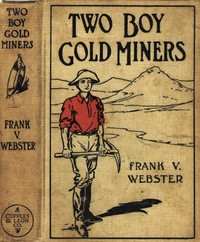
For Two Boy Gold Miners; Or, Lost in the Mountains — A Reader’s Guide, the stored edition analysis reports 46,349 words, 3 hr 22 min estimated reading time, and 5 detected text sections.
The text analysis averages about 12.2 words per sentence, while the detected sections provide another way to judge how the source is divided.
Project Gutenberg metadata also associates the work with “Western stories,” connecting these edition facts with the source record’s subject description.
Explore this collection
These alternatives are selected using recorded categories and estimated reading time.
About 213 minutes
Young Readers Enchanted Adventures
48,864 recorded words. 11 minutes difference from this book's estimate.
View Gutenberg source #41671About 180 minutes
Young Readers Enchanted Adventures
41,307 recorded words. 22 minutes difference from this book's estimate.
View Gutenberg source #49131About 178 minutes
Young Readers Enchanted Adventures
40,916 recorded words. 24 minutes difference from this book's estimate.
View Gutenberg source #43112Search stored excerpts and compare books → Choose by your preferences →
Choices use stored catalog measurements. Estimates vary with reading speed. A shared category is a catalog label, not a claim that two books have the same argument or literary quality.
Search reads excerpt text stored with this catalog and links to its associated Gutenberg record. The connection is stored in the site database; this tool does not recheck that every excerpt is word-for-word identical to that external record. Excerpt search does not cover every chapter and does not verify historical publication dates.
Catalog snapshot checked: 2026-09-25. Coverage: 95 public books, 95 available source excerpts.
Calculated from edition completeness, EPUB availability, text structure and catalogue metadata. Not a user rating.
Total of 100 points, scaled to a 2.5-5.0 range. Editions with an empty description or a missing EPUB file are not scored.
Public-domain source text
The source text is kept in the dedicated reader, separate from this catalogue record and its commentary.
Frank V. Webster's Two Boy Gold Miners; Or, Lost in the Mountains opens not with a rush to the gold fields but with a drought-stricken farm and a father scanning a cloudless sky. The novel's early chapters move at the pace of rural worry—short, anxious exchanges between Enos and his wife Debby, their speech laced with repetition and sighs. This deliberate, domestic rhythm gives way to a markedly different tempo once the brothers Jed and Will head west. The prose quickens: dialogue becomes clipped, action verbs multiply, and the landscape shifts from parched fields to bucking broncos and mountain storms. The shift in pace is not merely scenic but structural, marking a transition from a world of waiting to one of constant motion.
The novel's dialogue carries much of its character work. Enos speaks in halting, worried phrases—'Things are pretty dry around here, aren't they, Enos?' / 'That's what they are, Debby'—the repetition mirroring his helplessness. By contrast, the old miner Gabe Harrison uses a more assured, colloquial rhythm: 'I've had enough of ordinary mining. I want to get at something big.' His speech is peppered with western idioms ('tenderfeet,' 'cleaned up a pile') and direct assertions. The gambler Con Morton, glimpsed only briefly, speaks in threats and deflections. Webster differentiates characters through these verbal tics: Jed's eager interjections, Will's more measured responses, and the bartender's laconic queries all build a social texture without lengthy exposition.
The first chapter lingers on the farm's slow crisis: Enos stares at the sky, Debby sighs, Nettie washes dishes. The sentences are longer, the action minimal. Once the gold strike is announced, the narrative accelerates. Chapter headings telegraph movement: 'Off for the West,' 'The Bucking Bronco,' 'In the Rapids.' Scenes become shorter, with more physical action—a runaway horse, a storm, a bear cornering the boys. The prose itself tightens: 'With the first gleam of daylight Gabe was up, and roused the boys.' This compression of time and increase in incident density marks a clear shift from the novel's opening stasis to its later kinetic energy.
Webster uses small, repeated details to anchor the story. The drought at the farm—'not a drop going on four weeks'—is echoed later by the parched mountain trails. The father's worry about 'short crop' finds a parallel in the miners' anxiety over 'pay dirt.' Guns appear first as distant threats (a gambler's revolver 'as large as cannons' in Jed's dream) and then as real objects in the saloon confrontation. The motif of being 'lost' is literalized in the title and reinforced by Gabe's decision to 'strike off into the mountains' away from known camps. These recurrences give the episodic plot a cohesive texture, linking the boys' initial helplessness to their gradual competence in a harsh environment.
Readers attentive to shifts in sentence rhythm will find that Webster's prose mirrors his characters' journey from stasis to action. The early chapters reward patience with a detailed portrait of rural hardship; later chapters offer the swift, episodic pleasures of a western adventure. The novel's language—plain, functional, but carefully varied—serves as a quiet guide to its emotional and geographical terrain.
Reading the editorial notes on Two Boy Gold Miners, I found myself lingering on that quiet shift from the family’s cramped struggles to the open, dangerous mountains. It reminded me of my own worn copy of the Double Challenge — Reading Companion, how its gentle annotations once made me pause, not to analyze, but simply to remember where I was when I first felt that same lift of escape.
Build a private reading journal entry for this title.