About 276 minutes
Jane Allen, Center — A Reader’s Guide
Young Readers Enchanted Adventures
63,289 recorded words. 4 minutes difference from this book's estimate.
View Gutenberg source #40908
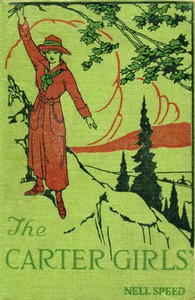
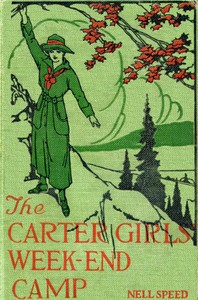
The Carter Girls — Key Ideas to Explore can be approached with a clearer sense of reading commitment from its source measurements: 62,333 words, 4 hr 32 min estimated reading time, and 6 detected text sections.
The text analysis averages about 16.9 words per sentence, while the detected sections provide another way to judge how the source is divided.
Project Gutenberg metadata also associates the work with “Family -- Juvenile fiction,” connecting these edition facts with the source record’s subject description.
Explore this collection
These alternatives are selected using recorded categories and estimated reading time.
About 276 minutes
Young Readers Enchanted Adventures
63,289 recorded words. 4 minutes difference from this book's estimate.
View Gutenberg source #40908About 265 minutes
Young Readers Enchanted Adventures
60,746 recorded words. 7 minutes difference from this book's estimate.
View Gutenberg source #53975About 281 minutes
Young Readers Enchanted Adventures
64,557 recorded words. 9 minutes difference from this book's estimate.
View Gutenberg source #38558Search stored excerpts and compare books → Choose by your preferences →
Choices use stored catalog measurements. Estimates vary with reading speed. A shared category is a catalog label, not a claim that two books have the same argument or literary quality.
Search reads excerpt text stored with this catalog and links to its associated Gutenberg record. The connection is stored in the site database; this tool does not recheck that every excerpt is word-for-word identical to that external record. Excerpt search does not cover every chapter and does not verify historical publication dates.
Catalog snapshot checked: 2026-09-25. Coverage: 95 public books, 95 available source excerpts.
Calculated from edition completeness, EPUB availability, text structure and catalogue metadata. Not a user rating.
Total of 100 points, scaled to a 2.5-5.0 range. Editions with an empty description or a missing EPUB file are not scored.
Public-domain source text
The source text is kept in the dedicated reader, separate from this catalogue record and its commentary.
The Carter Girls opens with a sharp disagreement between sisters Helen and Douglas over their father's medical diagnosis. Helen dismisses specialists as self-interested—'A specialist can always find you suffering with his specialty'—while Douglas urges acceptance of the doctor's verdict. This early clash establishes a pattern of contrasting temperaments: Helen's skeptical, impulsive nature against Douglas's steady, responsible one. The family structure is immediately clear: five siblings forming 'stair steps,' with Douglas at eighteen and Bobby, the youngest, as 'the joy and torment of the whole family.' Speed uses dialogue to reveal character, not just plot, and the sisters' voices remain distinct throughout the excerpts.
The opening chapter introduces a recurring tension: the Carters' distrust of professional authority. Helen's rant against doctors—'If doctors agreed among themselves, I’d have more use for them'—reflects a broader family trait of questioning expertise. She recalls how Dr. Davis diagnosed malaria because he himself had it, and another doctor blamed 'an excess of hydrochlorics.' This skepticism is not mere rebellion; it stems from experience and a protective instinct. Douglas, though more compliant, shares the family's wariness, as seen when she tries to shield the younger children from bad news. The pattern extends beyond medicine: later, the girls must navigate financial and social challenges without paternal guidance. Speed uses these debates to show how the sisters think, not just what they decide.
The move to the mountains forces a confrontation between city habits and rural realities. The servants Oscar and Susan are 'strictly urban in their raising' and view the mountain station with 'distrust and scorn.' Susan grumbles, 'this place jes’ ain’t no place at all,' while Oscar sleeps through the arrival. Meanwhile, the local boy Josh embodies mountain self-sufficiency, claiming 'Josephus ain’t above totin’ one of the niggers ’long with the trunks'—a line that also reveals period racial attitudes. Bobby, the youngest Carter, adapts instantly, declaring himself an 'expressman' and bonding with Josh. The car named 'Mountain Goat' and the ramshackle cart 'Josephus' underscore the improvisational nature of mountain life. Speed contrasts the sisters' urban competence with the need to learn new skills, from walking rough roads to managing servants in a setting where social hierarchies are unsettled.
The Carter sisters operate as a unit, but each has a defined role. Douglas, the eldest, is the caretaker: she 'tried to smooth her troubled brow' and later frets over Oscar and Susan being left behind. Helen is the outspoken challenger, while Nan and Lucy are observers and reactors. Bobby, though a boy, is grouped with the 'girls' in the title, suggesting his youth overrides gender. The burden of responsibility falls heavily on Douglas and Helen, who must decide when to share troubling news with the younger ones. In the mountain arrival scene, Lewis and Bill manage logistics, but the sisters make the key decisions—who rides, who walks, how to handle the servants. Speed shows leadership emerging from necessity, not choice. The repeated phrase 'We thought we’d make two loads of you' hints at the constant negotiation of resources and roles that defines their new life.
Readers attentive to dialogue will find Speed's character work in the exchanges between sisters, not in descriptive passages. The medical debate, the mountain journey, and the handling of servants all reveal the family's internal logic. Notice how often the girls correct or override each other—this is not harmony but active negotiation. The excerpts offer no resolution to the father's illness or the family's financial plight, so the interest lies in watching the Carters adapt, argue, and hold together under pressure.
I finished The Carter Girls and found myself thinking about how family pulls together when everything else shifts, that quiet stubbornness to keep each other close. It reminded me of something older, the same thread of endurance and loyalty. That feeling lingered through The Motor Boys Bound for Home; or, Ned, Bob and Jerry on the Wrecked Troopship — Edition Insights, though the stakes there wear a different uniform. Somehow, it’s the same warm weight under the surface.
Save your reaction, strongest insight, and memorable passage.