About 272 minutes
The Carter Girls — Key Ideas to Explore
Young Readers Enchanted Adventures
62,333 recorded words. 7 minutes difference from this book's estimate.
View Gutenberg source #40177
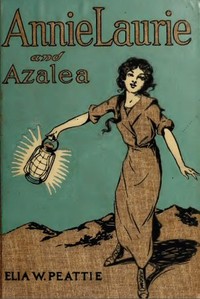
Before opening Annie Laurie and Azalea — A Reader’s Guide, the edition data offers a quick orientation: 60,746 words, 4 hr 25 min estimated reading time, and 6 detected text sections.
The text analysis averages about 15.6 words per sentence, while the detected sections provide another way to judge how the source is divided.
Project Gutenberg metadata also associates the work with “Friendship -- Juvenile fiction,” connecting these edition facts with the source record’s subject description.
Explore this collection
These alternatives are selected using recorded categories and estimated reading time.
About 272 minutes
Young Readers Enchanted Adventures
62,333 recorded words. 7 minutes difference from this book's estimate.
View Gutenberg source #40177About 257 minutes
Young Readers Enchanted Adventures
59,004 recorded words. 8 minutes difference from this book's estimate.
View Gutenberg source #52287About 256 minutes
Young Readers Enchanted Adventures
58,730 recorded words. 9 minutes difference from this book's estimate.
View Gutenberg source #40179Search stored excerpts and compare books → Choose by your preferences →
Choices use stored catalog measurements. Estimates vary with reading speed. A shared category is a catalog label, not a claim that two books have the same argument or literary quality.
Search reads excerpt text stored with this catalog and links to its associated Gutenberg record. The connection is stored in the site database; this tool does not recheck that every excerpt is word-for-word identical to that external record. Excerpt search does not cover every chapter and does not verify historical publication dates.
Catalog snapshot checked: 2026-09-25. Coverage: 95 public books, 95 available source excerpts.
Calculated from edition completeness, EPUB availability, text structure and catalogue metadata. Not a user rating.
Total of 100 points, scaled to a 2.5-5.0 range. Editions with an empty description or a missing EPUB file are not scored.
Public-domain source text
The source text is kept in the dedicated reader, separate from this catalogue record and its commentary.
Peattie opens Annie Laurie and Azalea with a precise winter landscape: a red clay road "frosted delicately with white" and "frost flowers" like fern. The smoke shafts from cabins rise "straight, gray and shadowy" through lilac air, establishing a visual rhythm that mirrors the story's dual perspectives. The dialogue immediately distinguishes the girls—Azalea uses dialect ("Ain't he there yet?") and a borrowed phrase from Hi Kitchell's mother ("I bin goin' like a streak o' lightnin'"), while Annie Laurie speaks in a more standard, direct register. This contrast in voice, set against the mountain backdrop, becomes the engine of the narrative.
Peattie uses dialect not as decoration but as a precise tool for characterization. Azalea's speech is peppered with regional contractions and rhythms: "Ain't he there yet?" and "Maybe the ponies have been naughty again." Her mother calls from the cabin, and Jim Stuart McBirney responds with "You've got all your work done, ben't you?" This consistent vernacular grounds the McBirney family in the mountain setting. In contrast, Annie Laurie's dialogue is more standard and direct. When she speaks to Mrs. Disbrow, she says, "I'm strong and well. I'm very thankful"—a plain, almost formal statement. The difference is not merely phonetic; it reflects their backgrounds and temperaments. Azalea's language is communal, borrowed from family and neighbors; Annie Laurie's is self-contained, revealing a girl accustomed to relying on her own judgment. Peattie never explains this contrast; she lets the words themselves do the work.
Peattie often lets what is not said carry the emotional weight. In the scene with Mrs. Disbrow, Annie Laurie offers cheerful platitudes—"you have nothing to do—no Monday washing to think of"—only to see the sick woman "flush a trifle." The narrator notes that Annie Laurie "saw that she had said something that annoyed her," but the dialogue does not repair the misstep. Instead, Mrs. Disbrow retreats into self-pity: "I'm nothing but a drag on my family." Annie Laurie's response—"I don't suppose that makes them very happy"—is blunt, almost harsh, yet the narrative frames it as "her hearty way." The gap between intention and effect is left for the reader to gauge. Later, when Mrs. Disbrow mentions going West, Annie Laurie's thoughts turn to theft and justice, but she says nothing aloud. The dialogue remains polite; the moral conflict stays submerged, creating a tension that the spoken words only hint at.
Peattie's descriptions of characters' bodies often reveal more than their speech does. Annie Laurie is "broad of shoulder, with a backbone that might have been made of steel"—a metaphor that suggests both physical strength and moral rigidity. Hannah Disbrow is introduced through her frailty: "so slender that Annie Laurie ... wondered how the poor thing managed to keep upright." Her face is "ivory-colored," her frock an ill-fitting "watermelon" pink, and her eyes are "dreadfully crossed." The details are clinical, almost pitiless, yet they evoke sympathy without sentimentality. Azalea, by contrast, is described in motion: she "came running from the cabin with the manner of a girl very much behindhand." Her cheeks are "over-flushed," and she leans her head against the cabin to catch her breath. These physical cues—a steel backbone, crossed eyes, flushed cheeks—function as a silent language, telling the reader what the characters themselves might not articulate.
The Blue Ridge Mountains are not merely a backdrop; they shape the story's rhythm and mood. The opening paragraph establishes a world of precise natural details: the "long red clay road," the "frost flowers" like fern, the "shafts of smoke" rising through "lilac-tinted air." Azalea loves the scene—the pines with hoarfrost, the waterfall with icicles, the scent of wood-smoke, and the sight of "Molly Cottontail" scampering. This is a world where nature is both beautiful and demanding. The road is "long" and "red," the ponies "act up" in the cold. Peattie uses the setting to create a sense of isolation and self-reliance. The cabins are "half-hidden," the mountains form a "semicircle" around the valley. This geography mirrors the characters' lives: they are connected yet separate, visible yet remote. The frost and smoke are not just atmospheric; they are the texture of daily existence, and Peattie renders them with a specificity that makes the setting feel alive.
Peattie's craft lies in the accumulation of small, precise choices—a dialect phrase, a physical detail, a moment of silence. Readers attentive to these choices will find a story told as much through what is withheld as through what is spoken. The excerpts offer a clear sense of the author's method: character is revealed through voice and body, and the mountain landscape is never merely decorative. Approach the full text with an ear for the rhythms of speech and an eye for the telling gesture.
There’s something about the way Peattie lets Azalea’s mountain cadence sit beside Annie Laurie’s plain speech—like two kinds of weather meeting. I remember frost flowers on the windowpane and felt that quiet ache of distance. It reminds me of returning to The Train Boy — A Reader’s Guide, that same unhurried noticing of a voice that stays with you long after the last page turns.
Your answers remain private and are stored only in this browser.