About 283 minutes
Mark Tidd, Editor — Inside the Classic
Young Readers Enchanted Adventures
64,899 recorded words. 2 minutes difference from this book's estimate.
View Gutenberg source #41964
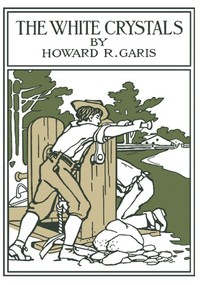
The source record for The White Crystals: Being an Account of the Adventures of Two Boys — A Reader’s Guide measures this digital text at 64,557 words, 4 hr 41 min estimated reading time, and 7 detected text sections.
The text analysis averages about 15.1 words per sentence, while the detected sections provide another way to judge how the source is divided.
Project Gutenberg metadata also associates the work with “Boys -- Juvenile fiction,” connecting these edition facts with the source record’s subject description.
Explore this collection
These alternatives are selected using recorded categories and estimated reading time.
About 283 minutes
Young Readers Enchanted Adventures
64,899 recorded words. 2 minutes difference from this book's estimate.
View Gutenberg source #41964About 276 minutes
Young Readers Enchanted Adventures
63,289 recorded words. 5 minutes difference from this book's estimate.
View Gutenberg source #40908About 272 minutes
Young Readers Enchanted Adventures
62,333 recorded words. 9 minutes difference from this book's estimate.
View Gutenberg source #40177Search stored excerpts and compare books → Choose by your preferences →
Choices use stored catalog measurements. Estimates vary with reading speed. A shared category is a catalog label, not a claim that two books have the same argument or literary quality.
Search reads excerpt text stored with this catalog and links to its associated Gutenberg record. The connection is stored in the site database; this tool does not recheck that every excerpt is word-for-word identical to that external record. Excerpt search does not cover every chapter and does not verify historical publication dates.
Catalog snapshot checked: 2026-09-25. Coverage: 95 public books, 95 available source excerpts.
Calculated from edition completeness, EPUB availability, text structure and catalogue metadata. Not a user rating.
Total of 100 points, scaled to a 2.5-5.0 range. Editions with an empty description or a missing EPUB file are not scored.
Public-domain source text
The source text is kept in the dedicated reader, separate from this catalogue record and its commentary.
The opening chapter of The White Crystals establishes a brisk, diagnostic tone: Dr. Glasby pronounces Roger Anderson “run down” and prescribes fresh country air, a verdict delivered with a theatrical “Um!” and a pinch of the boy’s biceps. The doctor’s bluntness—he declares Roger needs “fresh country air, and more air”—sets a pattern of direct, no-nonsense speech that recurs throughout the excerpts. The narrative voice is efficient, moving quickly from the doctor’s office to the farm, where Roger’s cousin Adrian Kimball becomes his guide to rural life. The prose favors clear action over interior reflection, and the early chapters alternate between instructional farm scenes (gathering honey, loading grapes) and hints of larger adventures to come.
The excerpts reveal a consistent preference for blunt, declarative dialogue. Mrs. Kimball’s firm refusal—“‘No, sir,’ replied Mrs. Kimball, firmly, ‘I won’t sign’”—echoes the doctor’s earlier pronouncements. Characters rarely hedge or qualify; they state intentions plainly. Adrian’s response to a taunt about the bob-sled is restrained: “he merely motioned for his crew to keep near him, and answered nothing.” This economy of speech extends to the narrator, who describes actions without embellishment. When Roger and Adrian face a wildcat, the prose is terse: “Its forepaws struck the boy on the shoulders.” The effect is a story that feels brisk and unadorned, prioritizing forward momentum over lyrical description.
The narrative’s pace is regulated by the rhythm of farm life and the changing seasons. Early chapters move slowly through chores: gathering honey, hauling grapes, and the careful description of a “load of grapes” being transported. The pace quickens markedly in the later excerpts, especially during the coasting contest. The description of the hill—“the surface of the slope was one long stretch of ice and snow”—is followed by a rapid accumulation of detail: crowds gathering, teams dragging sleds, and the “triple contest” beginning. The shift from leisurely farm work to the high-stakes race is abrupt, reflecting a structural change in the book from domestic episodes to competitive action. The narrator notes the time precisely (“An hour before that time…”) to heighten tension.
The rural setting is not merely a backdrop but an active force. The farm is a place of labor and minor mishaps—a lost mountain, a fight with a wildcat—while the town of Cardiff becomes the stage for rivalry. The coasting hill, “Lafayette hill,” is described with topographic care: the road joining the main thoroughfare, the “big bank of snow” at the finish, the two-mile incline. The narrator emphasizes the physical effort required: the Cardiff crew must drag their bob uphill, while their rivals are spared that labor. The setting also introduces social tension, as the Cardiff boys are “greatly outnumbered” by supporters of Onativia and Lafayette. The landscape thus mirrors the competitive dynamics of the plot, with every hill and snowbank carrying strategic weight.
Readers should note that the excerpts cover only the first quarter of the book and the climax of the coasting race. The middle chapters—including those on “Copper and Old Bones,” “Jack Frost,” and “Underneath the Ground”—are not represented here, so the full trajectory of the plot remains unknown. The narrative voice, however, remains consistent: direct, action-oriented, and sparing with interior monologue. Pay attention to how the author handles the transition from farm routines to the more suspenseful underground and legal conflicts hinted at in the chapter titles.
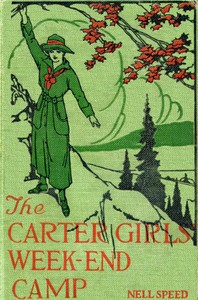
Reading about Roger and Adrian’s rivalries in The White Crystals, I felt that particular ache of summertime—the way contests feel monumental, yet domestic. It reminded me of a quiet afternoon spent with The Carter Girls' Week-End Camp — Key Ideas to Explore, where the same sturdy friendship and gentle adventure seemed to linger between the lines, like porch dust in late light.
Save your reaction, strongest insight, and memorable passage.