About 281 minutes
The White Crystals: Being an Account of the Adventures of Two Boys — A Reader’s Guide
Young Readers Enchanted Adventures
64,557 recorded words. 2 minutes difference from this book's estimate.
View Gutenberg source #38558
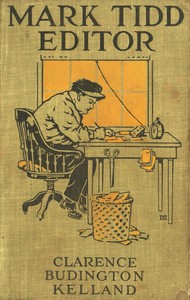
The source record for Mark Tidd, Editor — Inside the Classic measures this digital text at 64,899 words, 4 hr 43 min estimated reading time, and 25 detected text sections.
The text analysis averages about 13.4 words per sentence, while the detected sections provide another way to judge how the source is divided.
Project Gutenberg metadata also associates the work with “Friendship -- Juvenile fiction,” connecting these edition facts with the source record’s subject description.
Explore this collection
These alternatives are selected using recorded categories and estimated reading time.
About 281 minutes
Young Readers Enchanted Adventures
64,557 recorded words. 2 minutes difference from this book's estimate.
View Gutenberg source #38558About 276 minutes
Young Readers Enchanted Adventures
63,289 recorded words. 7 minutes difference from this book's estimate.
View Gutenberg source #40908About 293 minutes
Young Readers Enchanted Adventures
67,336 recorded words. 10 minutes difference from this book's estimate.
View Gutenberg source #45963Search stored excerpts and compare books → Choose by your preferences →
Choices use stored catalog measurements. Estimates vary with reading speed. A shared category is a catalog label, not a claim that two books have the same argument or literary quality.
Search reads excerpt text stored with this catalog and links to its associated Gutenberg record. The connection is stored in the site database; this tool does not recheck that every excerpt is word-for-word identical to that external record. Excerpt search does not cover every chapter and does not verify historical publication dates.
Catalog snapshot checked: 2026-09-25. Coverage: 95 public books, 95 available source excerpts.
Calculated from edition completeness, EPUB availability, text structure and catalogue metadata. Not a user rating.
Total of 100 points, scaled to a 2.5-5.0 range. Editions with an empty description or a missing EPUB file are not scored.
Public-domain source text
The source text is kept in the dedicated reader, separate from this catalogue record and its commentary.
The first chapter of Mark Tidd, Editor introduces the narrator, Binney Jenks, and his friend Mark Tidd through a conversation about the Wicksville Trumpet. Mark declares the paper is “b-b-busted,” and Binney retorts that it has been “cracked for quite a spell.” The exchange immediately establishes Mark’s stutter—rendered as repeated consonants—and Binney’s dry, colloquial wit. Mark’s father, an inventor who struck it rich with a turbine engine but still wears overalls and forgets errands, provides a comic backdrop. The boys’ plan to revive the Trumpet emerges not from a grand scheme but from Binney’s offhand remark, which Mark seizes as “an idea.”
The story is told entirely in first person by Binney Jenks, whose dialect is thick with contractions and rural phrasing: “I calc’late,” “hain’t,” “perty.” Mark’s stutter is written out as repeated letters (“b-b-busted,” “g-g-gettin’”), a device that slows his speech and signals thoughtfulness. The narration often includes direct dialogue without attribution tags, relying on context and punctuation to indicate speakers. For example, when Mark says “Fellows, this Binney Jenks is g-g-gettin’ so he talks like a minstrel show,” the line is followed by Tallow’s question without a “said Tallow.” This technique keeps the pace brisk and mimics spoken conversation.
The Trumpet is not just a setting but a catalyst for the plot. Mark’s first move as editor is to sell advertising at the county fair, which leads the boys into the world of local politics. The paper’s financial trouble is described metaphorically: “it hain’t been tootin’ loud enough to notice for a year.” Later, Mark justifies eavesdropping on political rivals by saying, “Newspaper men, hain’t we?” The paper becomes a license to investigate, and the boys’ amateur status is both a limitation and an advantage—they are underestimated by adults.
In the fairground excerpt, Mark spots two men—Brown and Wiggins—meeting in secret. He reasons that since they are political enemies, their private meeting is suspicious. Through a series of logical steps, he deduces that they might be conspiring about the sheriff’s race. He does not need to eavesdrop; he already knows enough from public knowledge. This scene showcases Mark’s method: gathering facts, asking questions, and connecting dots. The reader sees his mind at work, and the payoff is a quiet chuckle rather than a dramatic revelation.
The humor in the excerpts relies on deadpan delivery and absurd comparisons. Mark’s size is described with a simile: “you ought to have a turn-table to move Mark around on, like they have for locomotives.” Binney’s self-deprecating lines—“Oh, is that what it is? I sort of figgered maybe it was a notion”—undercut Mark’s praise. Even the father’s absentmindedness is played for laughs: he might bring home a bag of sugar instead of vanilla. The tone is consistently light, with no scene played for high stakes; even political scheming is treated as a puzzle.
Readers approaching Mark Tidd, Editor for the first time should pay attention to how Binney’s narration shapes the story. His voice is the filter through which all events pass, and his dry observations often carry the humor. Mark’s stutter, far from being a weakness, becomes a marker of his careful thinking. The political subplot, introduced midway, rewards attention to small details—a chance remark, a hidden meeting—that Mark turns into clues.
I remember my grandfather’s old stack of them, smelling of attic dust, and how a quiet afternoon slipped away into Mark Tidd’s plotting. It’s the same steady pulse I felt later in Wings over England — Inside the Classic, where patience, not speed, carried a boy forward. That unhurried courage lingers. I still half expect to find those boys around a corner.
Save your reaction, strongest insight, and memorable passage.