About 272 minutes
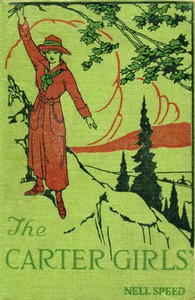
The Carter Girls — Key Ideas to Explore
Young Readers Enchanted Adventures
62,333 recorded words. 4 minutes difference from this book's estimate.
View Gutenberg source #40177

The catalog record for Jane Allen, Center — A Reader’s Guide provides practical reading context through 63,289 words, 4 hr 36 min estimated reading time, and 31 detected text sections.
The text analysis averages about 13.8 words per sentence, while the detected sections provide another way to judge how the source is divided.
Project Gutenberg metadata also associates the work with “College students -- Juvenile fiction,” connecting these edition facts with the source record’s subject description.
Explore this collection
These alternatives are selected using recorded categories and estimated reading time.
About 272 minutes
Young Readers Enchanted Adventures
62,333 recorded words. 4 minutes difference from this book's estimate.
View Gutenberg source #40177About 281 minutes
Young Readers Enchanted Adventures
64,557 recorded words. 5 minutes difference from this book's estimate.
View Gutenberg source #38558About 283 minutes
Young Readers Enchanted Adventures
64,899 recorded words. 7 minutes difference from this book's estimate.
View Gutenberg source #41964Search stored excerpts and compare books → Choose by your preferences →
Choices use stored catalog measurements. Estimates vary with reading speed. A shared category is a catalog label, not a claim that two books have the same argument or literary quality.
Search reads excerpt text stored with this catalog and links to its associated Gutenberg record. The connection is stored in the site database; this tool does not recheck that every excerpt is word-for-word identical to that external record. Excerpt search does not cover every chapter and does not verify historical publication dates.
Catalog snapshot checked: 2026-09-25. Coverage: 95 public books, 95 available source excerpts.
Calculated from edition completeness, EPUB availability, text structure and catalogue metadata. Not a user rating.
Total of 100 points, scaled to a 2.5-5.0 range. Editions with an empty description or a missing EPUB file are not scored.
Public-domain source text
The source text is kept in the dedicated reader, separate from this catalogue record and its commentary.
The opening chapter of Jane Allen, Center sets a contemplative mood with an extended metaphor: clouds are described as "jolly round fleecy" playmates that "tumbled over their playmates" and "baby cloudlets" that slide down slopes, while "haughty, majestic, dignified leaders" march toward the prairie line. This sky-scape mirrors Jane Allen's own mental weather—she resolves to practice "moderation" with her worries, yet a drop of rain lands with "the precision of an eye dropper," puncturing her philosophizing. The passage establishes a pattern of contrasts between playful and serious, personal and communal, that recurs throughout the excerpts.
The opening sky scene is not mere decoration. Jane's gaze upward yields "steely glints" that "quivered into sharp, silver blade-like flashes," a description that blends natural observation with a hint of competitive edge. The clouds are personified as reluctant workers—"those young sky rowdies never wanted to work, always romping and skylarking"—which echoes the tension between duty and leisure that Jane faces as she prepares to leave her ranch home for Wellington College. Later, the weather reappears only obliquely, but the initial image of sunshine "braving the cloud's attack" foreshadows Jane's role as a steadying force amid social storms. The narrative voice, through Jane's musings, explicitly links sky and fortune: "clouds and sunshine, pleasant here and a storm somewhere else." This pattern of using natural phenomena to reflect inner states is a deliberate structural choice, not a casual backdrop.
The title Jane Allen, Center points to basketball, but the excerpts reveal that the position carries weight beyond the court. Judith Stearns tells Jane, "We need you in our office, and we are going to run a basketball try-out next week. You are to be Center, you know. There is positively no chance of bolting that." The phrasing—"no chance of bolting"—suggests Jane's role is both an honor and an obligation. Jane herself worries about being "overburden" by honors, while Judith deflects praise by saying she is content as "little old Guard." The basketball try-out is mentioned alongside election-night preparations, linking athletic and political leadership. Jane's responsibilities as Center thus extend beyond the gymnasium: she is also class president, and the excerpts show her "quiet, composed, if a trifle flushed" as she takes the desk from retiring president Hazel Manners. The dual roles of athlete and leader create a specific tension between personal anxiety and public expectation.
The election-night scene in Chapter XVII reveals underlying social conflicts. Jane, as incoming class president, "plunged into the most difficult part of the meeting" with "characteristic directness," while across the room "Marian Seaton, surrounded by a chattering crowd" sits "directly below the big desk." The spatial arrangement—Marian below the desk, Jane at it—hints at rivalry. Earlier, Jane has resolved that Helen Powderly "would not be socially ostracised on account of her peculiar status," and she questions why Helen should be "made a victim of girls' foolish whims." The excerpts do not disclose the nature of Helen's status, but the language of "potential enemies" (the chapter title) and "massing for attack" (Judith's joke about the Marians) establishes a climate of factionalism. Jane's internal conflict—balancing her duty as leader with her personal loyalty to Helen—is the emotional core of these passages, though the outcome remains unknown from the excerpts alone.
The excerpts present a protagonist who is both reflective and action-oriented, caught between the idyllic ranch life of El Capitan and the structured social world of Wellington. Readers attentive to the opening cloud imagery will find it echoed in the shifting alliances and pressures Jane navigates. The basketball try-out and election meeting are not separate plotlines but converging arenas where Jane's character is tested. The incomplete nature of the excerpts leaves Helen Powderly's situation and the outcome of the election unresolved, inviting speculation grounded in the text's own cues.
Years of shelving have taught me there’s a quiet kinship between Bancroft’s Jane Allen, Center—her careful pointing at the sky, that lone cloud before the storm—and the hush found in Sisters — Context and Discussion, where another girl learns to hold her own ground. Both are, at heart, about making room for a breath before the shouting.
Answer a few questions and save a private reflection on this device.