About 256 minutes
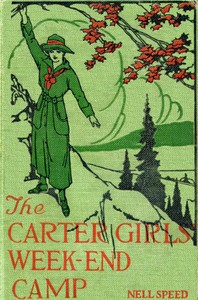
The Carter Girls' Week-End Camp — Key Ideas to Explore
Young Readers Enchanted Adventures
58,730 recorded words. 3 minutes difference from this book's estimate.
View Gutenberg source #40179
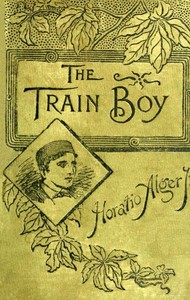
The catalog record for The Train Boy — A Reader’s Guide provides practical reading context through 58,050 words, 4 hr 13 min estimated reading time, and 48 detected text sections.
The text analysis averages about 10.9 words per sentence, while the detected sections provide another way to judge how the source is divided.
Project Gutenberg metadata also associates the work with “Conduct of life -- Juvenile fiction,” connecting these edition facts with the source record’s subject description.
Explore this collection
These alternatives are selected using recorded categories and estimated reading time.
About 256 minutes
Young Readers Enchanted Adventures
58,730 recorded words. 3 minutes difference from this book's estimate.
View Gutenberg source #40179About 257 minutes
Young Readers Enchanted Adventures
59,004 recorded words. 4 minutes difference from this book's estimate.
View Gutenberg source #52287About 248 minutes
Young Readers Enchanted Adventures
56,938 recorded words. 5 minutes difference from this book's estimate.
View Gutenberg source #53704Search stored excerpts and compare books → Choose by your preferences →
Choices use stored catalog measurements. Estimates vary with reading speed. A shared category is a catalog label, not a claim that two books have the same argument or literary quality.
Search reads excerpt text stored with this catalog and links to its associated Gutenberg record. The connection is stored in the site database; this tool does not recheck that every excerpt is word-for-word identical to that external record. Excerpt search does not cover every chapter and does not verify historical publication dates.
Catalog snapshot checked: 2026-09-25. Coverage: 95 public books, 95 available source excerpts.
Calculated from edition completeness, EPUB availability, text structure and catalogue metadata. Not a user rating.
Total of 100 points, scaled to a 2.5-5.0 range. Editions with an empty description or a missing EPUB file are not scored.
Public-domain source text
The source text is kept in the dedicated reader, separate from this catalogue record and its commentary.
From its first sentence, The Train Boy signals a world in motion: the four o'clock afternoon train from Milwaukee to Chicago has just passed Truesdell when the train boy, Paul Palmer, begins his rounds. The opening chapter sketches him in a single paragraph—medium height, dark brown hair, bright eyes, round cheeks—before plunging into an encounter with an elderly lady unfamiliar with railway customs. This immediate pairing of a capable young protagonist with a passenger in need of guidance establishes a pattern that will recur throughout the novel.
Alger's narrative voice is direct and economical. He pauses to sketch Paul, then lets action and dialogue carry the story. The early chapters alternate between Paul's work on the train and his home life, where his widowed mother faces financial pressure from a stingy employer, Miss Framley. These domestic scenes ground the adventure in recognizable struggles.
The opening chapter does more than introduce the hero; it establishes the train as a space where social roles are performed and tested. Paul moves through the cars with magazines, his pleasant voice announcing titles. The old lady who accepts a magazine without understanding the transaction becomes a small comic set-piece, but also a reminder that the train brings together strangers of different backgrounds. Alger uses this setting to showcase Paul's poise: he is neither awed by passengers nor dismissive of their ignorance.
Later chapters confirm that the train is not merely a backdrop. Paul's job as a newsboy gives him mobility and exposure to a range of characters—from the wealthy to the suspicious. The novel's title is literal: Paul is defined by his work on the cars. When he later changes business, the shift marks a turning point in his fortunes. Readers should note how Alger returns to train imagery even after Paul leaves the job, as when a later chapter titled "The Train-Wrecker" reintroduces the railway as a site of danger.
Paul's home life is introduced through conflict. His mother sews for Miss Framley, who pays poorly and complains. Paul's intervention—delivering a message that his mother will no longer work for her—shows his protective instinct and his willingness to speak plainly. The scene also introduces Grace Dearborn, a benefactor who offers better pay, setting up a contrast between generosity and meanness that runs through the book.
A more personal threat appears in the form of Stephen, Paul's half-brother. When they meet on the street, Stephen is newly dressed and flashy, offering drinks and a suspicious ten-dollar bill. Paul's refusal is firm but polite; he mentions having signed the pledge. The exchange reveals Stephen's resentment and Paul's wariness. Alger does not explain where Stephen's money came from, but Paul's doubt—"grievous doubts whether Stephen had come by his present wealth honestly"—is a clear signal to the reader. This encounter, placed in Chapter XXII, suggests that Stephen will reappear as an antagonist.
Alger frequently inserts small warnings that alert the reader to coming trouble. After Paul's satisfactory day, the narrator comments: "Yet how little can we foresee the future? Within the next twenty-four hours a great danger menaced him." Such direct address is characteristic of Alger's style and serves to heighten suspense without revealing specifics. Readers should watch for these moments—they often precede a reversal or a threat.
Another recurring technique is the use of chapter titles that hint at plot developments without giving them away. "An Unexpected Change," "A Catastrophe," and "A Revelation" promise upheaval. The table of contents itself functions as a map of rising and falling action: early chapters focus on Paul's work and family, middle chapters introduce complications (the artist, the swindler), and later chapters shift westward to Cheyenne and Omaha. The structure suggests a journey both literal and social.
Paul's voice is consistent: direct, respectful, and firm. When Miss Framley threatens to take her work elsewhere, Paul replies with evident satisfaction that his mother can no longer work for her. He does not gloat, but he does not soften the blow. Similarly, when Stephen offers a drink, Paul declines without apology: "I've signed the pledge." This moral clarity is reinforced by the narrator's approval—Paul is described as "smart" and his actions as "satisfactory."
Alger does not dwell on internal conflict. Paul's decisions are presented as right and natural. The reader is never asked to sympathize with Stephen or Miss Framley; their meanness is plainly labeled. This binary morality is typical of Alger's fiction and gives the story a clear trajectory. Readers expecting psychological complexity will not find it, but those following Paul's rise will recognize the pattern of virtue rewarded and vice exposed.
The excerpts reveal a novel built on contrasts: the open road of the train versus the cramped home, the generous patron versus the grasping employer, the honest boy versus the shady step-brother. Alger's method is to place his hero in situations that test his integrity and resourcefulness, then reward him with advancement. Readers who attend to the early scenes of train work and domestic negotiation will find the later adventures—including the move west and the mine sale—more resonant. The book rewards a reading that tracks how small acts of principle accumulate into larger changes of fortune.
Years among these shelves taught me that the train’s fleeting whistle in Alger’s story lingers long after the page turns. I often think of that restless boy when I reach for Annie Laurie and Azalea — A Reader’s Guide, for both books share the same hushed understanding—that home is less a place than a voice we learn to answer in ourselves.
Answer a few questions and save a private reflection on this device.