About 331 minutes
Sisters — Context and Discussion
Young Readers Enchanted Adventures
75,998 recorded words. 4 minutes difference from this book's estimate.
View Gutenberg source #42840
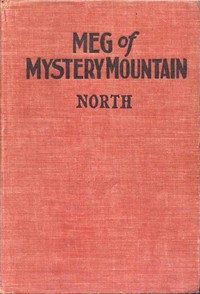
Before opening Meg of Mystery Mountain — Story, Setting & Ideas, the edition data offers a quick orientation: 76,886 words, 5 hr 35 min estimated reading time, and 10 detected text sections.
The text analysis averages about 16.5 words per sentence, while the detected sections provide another way to judge how the source is divided.
Project Gutenberg metadata also associates the work with “Detective and mystery stories,” connecting these edition facts with the source record’s subject description.
Explore this collection
These alternatives are selected using recorded categories and estimated reading time.
About 331 minutes
Young Readers Enchanted Adventures
75,998 recorded words. 4 minutes difference from this book's estimate.
View Gutenberg source #42840About 327 minutes
Young Readers Enchanted Adventures
75,078 recorded words. 8 minutes difference from this book's estimate.
View Gutenberg source #49492About 326 minutes
Young Readers Enchanted Adventures
74,870 recorded words. 9 minutes difference from this book's estimate.
View Gutenberg source #39433Search stored excerpts and compare books → Choose by your preferences →
Choices use stored catalog measurements. Estimates vary with reading speed. A shared category is a catalog label, not a claim that two books have the same argument or literary quality.
Search reads excerpt text stored with this catalog and links to its associated Gutenberg record. The connection is stored in the site database; this tool does not recheck that every excerpt is word-for-word identical to that external record. Excerpt search does not cover every chapter and does not verify historical publication dates.
Catalog snapshot checked: 2026-09-25. Coverage: 95 public books, 95 available source excerpts.
Calculated from edition completeness, EPUB availability, text structure and catalogue metadata. Not a user rating.
Total of 100 points, scaled to a 2.5-5.0 range. Editions with an empty description or a missing EPUB file are not scored.
Public-domain source text
The source text is kept in the dedicated reader, separate from this catalogue record and its commentary.
The novel opens not on Mystery Mountain but at a wharf below Highacres Seminary, where the languidly beautiful Jane Abbott passes through a bevy of girls with scarcely a nod. The scene is crowded, bustling with farewells and a small steamer churning water. Yet within pages, the setting contracts to the remote Redfords inn, where Meg—a girl with dark eyes and a smile that lightens gloom—teaches a dozen pupils in a one-room school. The shift is abrupt: from the chatter of schoolgirls to the quiet of a mountain classroom, from Marion Starr's round-robin promises to Ann Skittle's talk of marriage and children. This contrast in pace and voice is the novel's first clue that its mystery may be less about detection than about the spaces between noise and stillness.
The excerpts present two distinct vocal registers. The opening chapter is filled with the bright, rapid-fire dialogue of schoolgirls: “Sure thing, Betty Ann. I’ll tell my handsome brother Bob that you don’t want him to ever forget you.” The sentences are short, exclamatory, crowded with nicknames and laughter. Later, in the mountain sections, speech slows. Ann Skittle says, “Me an’ Hank is like to have kiddies an’ I’d be wishin’ you could teach ’em.” The grammar shifts, the vocabulary narrows, and the rhythm becomes halting. North does not simply report dialect; she uses it to mark a change in narrative gravity. The schoolgirls’ chatter is weightless; the mountain speech carries the heft of future lives. This vocal contrast is not incidental—it structures the reader’s sense of two worlds colliding.
Meg’s teaching method is described as “a charming way, quite her own, of teaching, with story and word pictures.” The narrator notes that even the master concedes she is more fitted by nature to instruct the child mind. This is not a generic compliment; it is a specific claim about Meg’s narrative function. She does not merely deliver information—she translates experience into image. When she kisses Ann Skittle and speaks of motherhood, the text says “in her voice there was a note of tenderness” and that tears “mist-like, always rose to her own eyes when she thought of the mother whom she never knew.” The teacher’s gaze is thus turned inward as well as outward. The pacing slows at such moments, allowing a private grief to surface briefly before Meg’s smile returns. These pauses are rare but telling.
The novel’s pacing is uneven in a deliberate way. The opening wharf scene moves quickly, with a flurry of names and gestures. Then the narrative slows to a near standstill in the mountain classroom, where Meg hears recitations and dismisses pupils at two. The mystery element—the County Weekly News that is “days overdue”—is introduced almost as an afterthought, buried in a sentence about Pa Heger’s request. The word “Important! Rush!” appears later, but the urgency feels mismatched with the surrounding calm. This suggests that the mystery may be less a plot engine than a device to observe how characters react to disruption. The reader is left to wonder whether the mountain’s secrets will be uncovered through action or through the slow accumulation of quiet observations.
Readers attentive to shifts in tempo will find that the novel’s mysteries are as much about character as about plot. The contrast between the seminary’s rapid farewells and the mountain’s deliberate rhythms invites a reading that lingers on what is said between the lines. Pay particular attention to moments when the narrative pauses—on a kiss, a tear, a delayed newspaper—for these are where the story’s deeper currents run.
Meg's loneliness up in those mountains stayed with me—that quiet ache of leaving one life behind. Something in her reminded me of another girl I met in Philippa — Themes and Context, whose own uncertainty felt just as real. I keep thinking about how both of them found their footing slowly, like breathing.
Answer a few questions and save a private reflection on this device.