About 46 minutes
The Factory Boy — Text and Context
Young Readers Enchanted Adventures
10,561 recorded words. 15 minutes difference from this book's estimate.
View Gutenberg source #43390
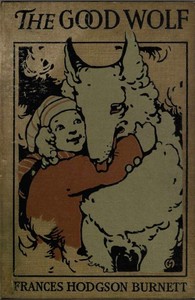
This digital edition of The Good Wolf — Background and Themes is described by source-level measurements including 13,805 words, 1 hr 1 min estimated reading time, and 3 detected text sections.
The text analysis averages about 17.5 words per sentence, while the detected sections provide another way to judge how the source is divided.
Project Gutenberg metadata also associates the work with “Animals -- Juvenile fiction,” connecting these edition facts with the source record’s subject description.
Explore this collection
These alternatives are selected using recorded categories and estimated reading time.
About 46 minutes
Young Readers Enchanted Adventures
10,561 recorded words. 15 minutes difference from this book's estimate.
View Gutenberg source #43390About 91 minutes
Young Readers Enchanted Adventures
20,840 recorded words. 30 minutes difference from this book's estimate.
View Gutenberg source #46159About 100 minutes
Young Readers Enchanted Adventures
22,951 recorded words. 39 minutes difference from this book's estimate.
View Gutenberg source #40015Search stored excerpts and compare books → Choose by your preferences →
Choices use stored catalog measurements. Estimates vary with reading speed. A shared category is a catalog label, not a claim that two books have the same argument or literary quality.
Search reads excerpt text stored with this catalog and links to its associated Gutenberg record. The connection is stored in the site database; this tool does not recheck that every excerpt is word-for-word identical to that external record. Excerpt search does not cover every chapter and does not verify historical publication dates.
Catalog snapshot checked: 2026-09-25. Coverage: 95 public books, 95 available source excerpts.
Calculated from edition completeness, EPUB availability, text structure and catalogue metadata. Not a user rating.
Total of 100 points, scaled to a 2.5-5.0 range. Editions with an empty description or a missing EPUB file are not scored.
Public-domain source text
The source text is kept in the dedicated reader, separate from this catalogue record and its commentary.
Frances Hodgson Burnett opens The Good Wolf with a narrator who speaks directly to a child listener, using repetitive, rhythmic phrases such as “fat little, nice little, round little boy” and “lovesome all over.” This oral-storytelling cadence establishes an intimate, playful tone. The story is framed as a “Hair Curling Story” told by a mother while combing her son Tim’s tangles—a domestic scene that turns grooming into a narrative ritual. Burnett’s diction blends the ordinary (“mop of curly hair”) with the whimsical (dimples caused by fairy kisses), grounding fantasy in everyday childhood experience.
Burnett’s prose relies on patterned repetition to define characters. Tim is introduced with a triplet: “fat little, nice little, round little boy.” The phrase “nice people” recurs as a moral shorthand: Tim and his mother “were both nice people.” This repetition creates a rhythmic, almost incantatory quality that suits a story meant to be read aloud. The narrator also echoes Barty’s internal doubts: “Was it? Was it? Was it?” and later “It wasn’t a dream—it wasn’t—it wasn’t—it wasn’t one!” These verbal loops mirror a child’s insistence and uncertainty, making the text feel spoken rather than written.
The main tale of Barty and the Good Wolf is nested within a framing story about Tim and his mother. Burnett uses this structure to blur the line between storytelling and reality. The mother’s combing becomes a trigger for narrative: “she would comb and brush, and while she did she told him the Hair Curling Stories.” Tim’s physical reactions—his “fat little body shake against her knee” when he hears something funny—anchor the fantasy in sensory detail. This frame also allows Burnett to comment on the act of storytelling itself, as when Barty’s mother responds to his tale with “I should think he was too, if he gave me such a nice present as that.”
Burnett deliberately leaves the magical events uncertain. After Barty receives a sled and a whip from the Good Wolf, he wakes to find the whip missing and wonders: “Was it a dream?” The text withholds a definitive answer. The whip later reappears under a wardrobe, but the animals summoned by cracking it remain unseen in the excerpts. Barty’s repeated assertions—“it wasn’t a dream”—suggest a child’s need to believe, while the narrator never confirms the magic’s objective existence. This ambiguity is reinforced by the framing story: Tim hears the tale as fiction, yet the reader may question whether the Good Wolf is real within Barty’s world.
Burnett indulges in playful language through exaggerated names and compound words. Barty’s full name is “Bartholomew Herbert Hubert Ellecompane,” a mouthful that the narrator jokes would waste time if used for gift-giving. The phrase “lovesome” is a Burnett coinage, repeated to describe Tim’s appealing appearance. The Good Wolf himself is introduced with a tentative, childlike qualification: “I do think he was a kind of a fairy.” These linguistic choices reflect a narrator who is attuned to a child’s sense of humor and logic, where names are games and new words can be invented on the spot.
Readers attentive to Burnett’s authorial choices will notice how she uses repetition, framing, and wordplay to create a story that feels both spontaneous and carefully crafted. The excerpts do not reveal whether the Good Wolf’s magic is real or imagined, leaving that question open. Pay attention to how the narrator’s voice shifts between the frame and the embedded tale, and how physical details—like the combing of hair or the hiding of a whip—anchor the fantasy in a recognizable childhood world.
The rain tapped at the window while I reread The Good Wolf, lingering on Burnett’s “lovesome” fairies and her gentle blur of waking and dream. That same soft uncertainty—where a child’s wish bends reality—stayed with me afterward. It led me, almost by accident, to A Struggle for a Fortune — Background and Themes, where fortune hinges on quieter, stranger shifts of fate.
Capture what you thought, learned, and would like to remember.