About 256 minutes
Under the White Ensign: A Naval Story of the Great War — Key Ideas to Explore
Historical Psychological Social Fiction
58,654 recorded words. 0 minutes difference from this book's estimate.
View Gutenberg source #52141
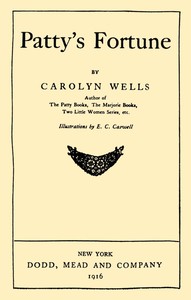
Before opening Patty's Fortune — Reading Companion, the edition data offers a quick orientation: 58,748 words, 4 hr 16 min estimated reading time, and 8 detected text sections.
The text analysis averages about 12.2 words per sentence, while the detected sections provide another way to judge how the source is divided.
Project Gutenberg metadata also associates the work with “Inheritance and succession -- Juvenile fiction,” connecting these edition facts with the source record’s subject description.
Explore this collection
These alternatives are selected using recorded categories and estimated reading time.
About 256 minutes
Historical Psychological Social Fiction
58,654 recorded words. 0 minutes difference from this book's estimate.
View Gutenberg source #52141About 243 minutes
Historical Psychological Social Fiction
55,766 recorded words. 13 minutes difference from this book's estimate.
View Gutenberg source #45680About 243 minutes
Historical Psychological Social Fiction
55,730 recorded words. 13 minutes difference from this book's estimate.
View Gutenberg source #45776Search stored excerpts and compare books → Choose by your preferences →
Choices use stored catalog measurements. Estimates vary with reading speed. A shared category is a catalog label, not a claim that two books have the same argument or literary quality.
Search reads excerpt text stored with this catalog and links to its associated Gutenberg record. The connection is stored in the site database; this tool does not recheck that every excerpt is word-for-word identical to that external record. Excerpt search does not cover every chapter and does not verify historical publication dates.
Catalog snapshot checked: 2026-09-25. Coverage: 95 public books, 95 available source excerpts.
Calculated from edition completeness, EPUB availability, text structure and catalogue metadata. Not a user rating.
Total of 100 points, scaled to a 2.5-5.0 range. Editions with an empty description or a missing EPUB file are not scored.
Public-domain source text
The source text is kept in the dedicated reader, separate from this catalogue record and its commentary.
The opening chapter of Patty's Fortune introduces a conflict that will shape the novel: Patty Fairfield's desire to pursue a career in light opera, opposed by her father. The dialogue moves briskly from a casual discussion of Labour Day to a serious argument about a stage manager's offer. Mr. Fairfield's tone shifts from teasing to firm, using a childhood lesson on "proportion" to argue against Patty's plan. Patty's response—"I've no intention of dropping it"—shows her determination. The scene is set at "The Pebbles," the family's summer home, with details of Patty's white frock and salmon-pink sweater emphasizing her youth and social standing.
The excerpt reveals character through contrasting speech patterns. Patty's dialogue is peppered with playful retorts: "You can't start anything, Dad," and self-deprecating humor about her feet. Mr. Fairfield, by contrast, uses measured, paternal language: "I don't want my daughter to be sacrificed to their business acumen." When he speaks in a tone Patty "had not heard since she was a little girl," the narrative signals a shift in authority. Nan, the mother, speaks only in brief, supportive murmurs, her role limited to mediating. The dialogue is the primary vehicle for conflict, with no interior monologue or description of emotions beyond flushed cheeks and pouting lips.
The argument unfolds in distinct phases: a light opening, a sudden interruption when Patty reveals the manager's visit, a tense pause for dinner, and a resumed debate in the library. This structure mirrors the novel's episodic style, with chapters likely following similar patterns of setup and resolution. The dinner scene acts as a deliberate break, enforcing the family rule against discussing unpleasant subjects at table. The pacing is quick, with short paragraphs and rapid exchanges. The father's lecture on proportion is a key rhetorical moment, slowing the pace to deliver a moral point. The excerpt ends mid-argument, suggesting that the conflict will extend across multiple chapters.
The setting is established through specific details: "The Pebbles" at the seashore, Labour Day, a "big couch hammock on the wide veranda." These details root the story in a particular social milieu—wealthy, leisured, and domestic. Patty's white shoes and silk stockings signal her class, while her father's reference to "society girl going on the stage" highlights the social stakes. The Maine connection appears through Patty's mention of meeting Maude Kent at Poland Spring, a real resort. The catalog subjects list Maine travel and description, suggesting that later chapters may shift to that setting. The opening, however, remains firmly in the Fairfield home, using the domestic space to frame the generational conflict.
Readers may find it useful to track how the father-daughter dynamic evolves across the novel. The opening chapter establishes a pattern of authority and resistance, but the excerpts do not reveal whether Patty's ambition is fulfilled or abandoned. Pay attention to how the narrative voice handles Patty's perspective—whether it remains external or shifts to her interior thoughts. The illustrations by E. C. Caswell, mentioned in the front matter, may offer visual cues to character and mood.
Rereading the opening of Patty’s Fortune, that quiet friction between a father’s plans and a daughter’s stubborn dreams, I was reminded of another old friend. The way Patty weighs duty against her own quiet wants—it felt like that summer in the tea room, girls and hope and clinking cups. Six Girls and the Tea Room — Reading Companion holds that same gentle ache, a familiar shade of wanting something more.
Save your reaction, strongest insight, and memorable passage.