About 213 minutes
Double Challenge — Reading Companion
Young Readers Enchanted Adventures
48,864 recorded words. 14 minutes difference from this book's estimate.
View Gutenberg source #41671
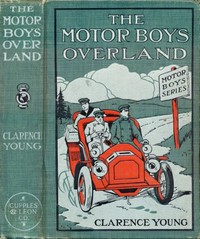
The source record for The Motor Boys Overland; Or, A Long Trip for Fun and Fortune — Themes and Context measures this digital text at 52,114 words, 3 hr 47 min estimated reading time, and 6 detected text sections.
The text analysis averages about 12.4 words per sentence, while the detected sections provide another way to judge how the source is divided.
Project Gutenberg metadata also associates the work with “Gold mines and mining -- Juvenile fiction,” connecting these edition facts with the source record’s subject description.
Explore this collection
These alternatives are selected using recorded categories and estimated reading time.
About 213 minutes
Young Readers Enchanted Adventures
48,864 recorded words. 14 minutes difference from this book's estimate.
View Gutenberg source #41671About 241 minutes
Young Readers Enchanted Adventures
55,272 recorded words. 14 minutes difference from this book's estimate.
View Gutenberg source #41877About 248 minutes
Young Readers Enchanted Adventures
56,938 recorded words. 21 minutes difference from this book's estimate.
View Gutenberg source #53704Search stored excerpts and compare books → Choose by your preferences →
Choices use stored catalog measurements. Estimates vary with reading speed. A shared category is a catalog label, not a claim that two books have the same argument or literary quality.
Search reads excerpt text stored with this catalog and links to its associated Gutenberg record. The connection is stored in the site database; this tool does not recheck that every excerpt is word-for-word identical to that external record. Excerpt search does not cover every chapter and does not verify historical publication dates.
Catalog snapshot checked: 2026-09-25. Coverage: 95 public books, 95 available source excerpts.
Calculated from edition completeness, EPUB availability, text structure and catalogue metadata. Not a user rating.
Total of 100 points, scaled to a 2.5-5.0 range. Editions with an empty description or a missing EPUB file are not scored.
Public-domain source text
The source text is kept in the dedicated reader, separate from this catalogue record and its commentary.
The second volume of the Motor Boys series opens with an automobile race that sets the pace for a cross-country journey. Bob, Ned, and Jerry, having won a touring car in the first book, decide to take a long trip to the West. They soon meet an old miner named Nestor, who carries the secret of a lost gold mine. The narrative quickly shifts from a pleasure cruise to a race against a gold rush, as word of rich diggings in the Hop Toad District leaks out. The boys must decide whether to sell their car or push on over the mountains.
The book’s subtitle promises “Fun and Fortune,” but the balance tilts early toward fortune. What begins as a leisurely automobile tour—the boys stopping to camp, meet a hunter, and observe a naturalist—is disrupted by a stream of miners. The miner Nestor, who had hoped to keep his claim secret, mutters, “The Hop Toad District! That’s the district where my lost mine is located!” The sudden appearance of hundreds of prospectors forces the group to abandon their original plan and “go over the mountains.” The automobile, initially a symbol of freedom and adventure, becomes a tool for survival in a competitive, high-stakes environment.
The car attracts attention wherever it goes. In the excerpts, miners pause to stare, and three men offer three thousand dollars for it on the spot. Nestor warns the boys not to sell, sensing “some game afoot.” The machine is both an asset and a liability: it enables rapid travel but marks the boys as outsiders. Later chapters hint at theft, fire, and attacks by Indians and cowboys. The car’s vulnerability mirrors the boys’ own precarious position in a lawless landscape where possession of a valuable vehicle invites trouble.
Clarence Young writes in a brisk, episodic style typical of early twentieth-century series fiction. Each chapter ends with a hook—a hold-up, a shot in the dark, a cliffhanger—that propels the reader forward. The dialogue is functional, often delivering exposition or warnings. The preface directly addresses “Dear Boys,” framing the book as a continuation of the Motor Boys’ exploits. The structure relies on a repeating pattern: the group encounters a new obstacle, overcomes it, and moves on. This rhythm, combined with the westward setting and the gold-rush urgency, gives the story a relentless forward momentum.
Readers should note that the excerpts cover only the first half of the book. The later chapters—titled “Attacked by Indians,” “Over a Cliff,” and “Wrecked”—suggest escalating dangers. The conclusion, “An Escape—Conclusion,” implies a resolution, but the exact fate of the mine and the boys’ fortune is not revealed in the provided text. Approach the book as a serial adventure where the automobile is both a vehicle and a character in its own right.
It reminded me of that long summer I first read The Motor Boys Overland, the way eager miles dissolved into something stranger—a mystery threading through the dust. Reading Under Orders: The story of a young reporter — Key Ideas to Explore later gave me that same quiet thrill: the chase less about the destination than the secrets found along the way. Some books just feel like that—a road unwinding.
Use these questions to collect your thoughts before moving on.