About 136 minutes
The Blind Brother: A Story of the Pennsylvania Coal Mines — A Closer Reading
Young Readers Enchanted Adventures
31,051 recorded words. 2 minutes difference from this book's estimate.
View Gutenberg source #45232
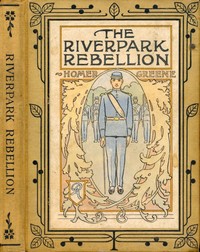
This digital edition of The Riverpark Rebellion — Inside the Classic is described by source-level measurements including 30,815 words, 2 hr 14 min estimated reading time, and 9 detected text sections.
The text analysis averages about 17.6 words per sentence, while the detected sections provide another way to judge how the source is divided.
Project Gutenberg metadata also associates the work with “Young men -- Conduct of life -- Juvenile fiction,” connecting these edition facts with the source record’s subject description.
Explore this collection
These alternatives are selected using recorded categories and estimated reading time.
About 136 minutes
Young Readers Enchanted Adventures
31,051 recorded words. 2 minutes difference from this book's estimate.
View Gutenberg source #45232About 142 minutes
Young Readers Enchanted Adventures
32,461 recorded words. 8 minutes difference from this book's estimate.
View Gutenberg source #50698About 146 minutes
Young Readers Enchanted Adventures
33,397 recorded words. 12 minutes difference from this book's estimate.
View Gutenberg source #52572Search stored excerpts and compare books → Choose by your preferences →
Choices use stored catalog measurements. Estimates vary with reading speed. A shared category is a catalog label, not a claim that two books have the same argument or literary quality.
Search reads excerpt text stored with this catalog and links to its associated Gutenberg record. The connection is stored in the site database; this tool does not recheck that every excerpt is word-for-word identical to that external record. Excerpt search does not cover every chapter and does not verify historical publication dates.
Catalog snapshot checked: 2026-09-25. Coverage: 95 public books, 95 available source excerpts.
Calculated from edition completeness, EPUB availability, text structure and catalogue metadata. Not a user rating.
Total of 100 points, scaled to a 2.5-5.0 range. Editions with an empty description or a missing EPUB file are not scored.
Public-domain source text
The source text is kept in the dedicated reader, separate from this catalogue record and its commentary.
The catalog subjects for The Riverpark Rebellion emphasize military education and the conduct of life, but the excerpts show a story that dwells less on drills or discipline than on the raw dynamics of a group of boys away from authority. The opening chapters follow cadets who have slipped away from their academy for an unauthorized outing, and the narrative voice is more interested in their collective mood—excitement, hunger, fear—than in any official code of conduct.
Greene devotes careful attention to the physical setting: the dark mouth of a tunnel, the cool shade of a forest, the narrow lane at the edge of woods. These details do more than set a scene; they shape the boys' decisions and emotions. The rebellion, as presented in these early pages, is not a principled stand but a gradual unraveling, driven by a few strong personalities and the simple, universal need for lunch.
The excerpts depict the cadets' departure from Riverpark as a series of small, unglamorous choices. There is no dramatic break; instead, the boys drift along railroad ties, help a younger comrade across bridges, and argue about whether to enter a tunnel. The ringleader, Brede, talks loudly about defying “Old Sil,” but the narrative undercuts his bravado by noting that he “felt that he had crossed the Rubicon of disobedience” and now meant to “indulge his vicious taste for rebellious freedom to the full.” The language is moralistic, yet the actual behavior is less villainous than disorganized.
The group's finances are meticulously tallied: forty-one boys contribute a total of six dollars and fifty-four cents, mostly in pennies and fractional currency. This concrete detail grounds the rebellion in economic reality—these are not wealthy young men but ordinary children pooling their pocket money. The catalog subject “Young men -- Conduct of life” implies a didactic purpose, but the excerpts show conduct being shaped less by principle than by hunger, fatigue, and the desire to fit in.
Greene repeatedly contrasts the boys' restless energy with the calming influence of the natural world. After the group decides not to enter the tunnel, they retreat to a patch of woods where “the forest air was so sweet” that they lie down to rest. The narrator observes that for most of the lads, “this quiet hour among the shadows of the forest was the only bit of genuine enjoyment that they had during their entire outing.” Even Brightly, a more thoughtful cadet, feels “the calming influence of Nature on his perturbed spirit.”
This emphasis on landscape is notable given the catalog's focus on military education. The academy itself is barely described in the excerpts; instead, Greene devotes paragraphs to the sensory experience of the countryside—the darkness of the tunnel, the coolness of the shade, the sound of trains flashing by. The rebellion, such as it is, unfolds against a backdrop that seems indifferent to the boys' schemes, and the narrative voice suggests that genuine enjoyment comes not from defiance but from stillness.
The narrator of The Riverpark Rebellion adopts a tone of measured disapproval, but the excerpts show that this moral stance is applied unevenly. Brede is described as coarse and vicious, yet the narrative also records his practical role as treasurer and spokesman. The younger boy Plumpy breaks the tension with a simple, human remark: “I'm hungry. Isn't it about lunch-time?” The narrator does not condemn this; instead, the observation leads to a collective problem-solving scene that feels more democratic than rebellious.
The catalog subject “Soldiers -- Juvenile fiction” might lead a reader to expect combat or heroism, but the excerpts contain no violence, no weapons, no confrontation with authority. The closest thing to a military action is the boys' march along the railroad, and even that is interrupted by a crying child and a dispute over a tunnel. Greene's interest lies in the social mechanics of a group under mild stress—who speaks, who follows, who objects—rather than in any formal soldierly code.
Readers approaching The Riverpark Rebellion through its catalog subjects should be prepared for a story that is less about military structure than about the informal hierarchies of boyhood. The excerpts suggest that Greene's real subject is not rebellion itself but the small, cumulative pressures—hunger, peer influence, the pull of the outdoors—that lead a group of ordinary children to test the limits of authority. The novel's value may lie less in its plot than in its patient observation of how a crowd becomes a mob, and how a quiet forest can undo the best-laid plans of a few determined boys.
Years shelving both, I've noticed how Greene's cadets find their truest selves along the river's edge, away from ranks and orders. There's a similar hush in Helen Ford, where quiet moments carry more weight than any grand design. Both books understand that hunger—whether for food or freedom—speaks softly, yet echoes longest. That kinship has stayed with me. Helen Ford — Text and Context holds that same patient breath.
Build a private reading journal entry for this title.